Blog
Blog  30-Dec-2025
.svg) 72,770
72,770 

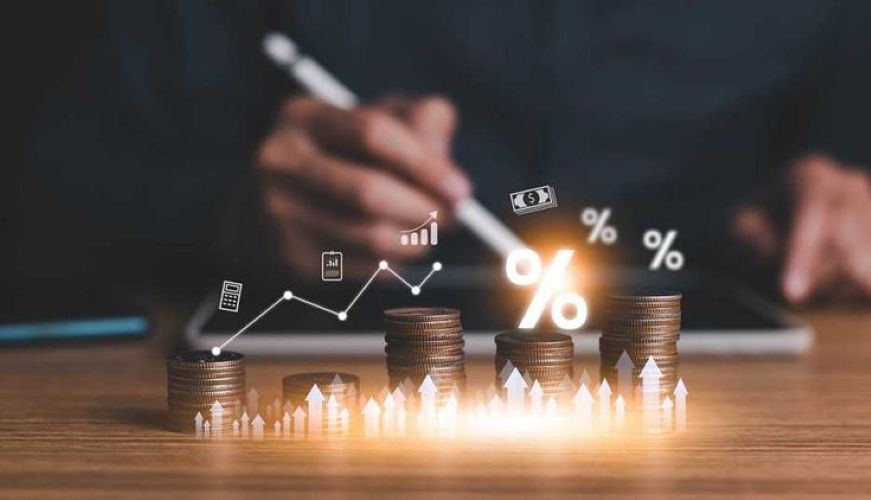
In the constantly shifting economic landscape of 2025, where inflation continues to simmer beneath the surface and investment markets change at an unprecedented pace, the term “idle capital” has become more relevant than ever. No longer viewed as merely money that has not yet been used, idle capital today is increasingly seen as a form of “financial seed.” If planted in the right place, it can grow into a sustainable income stream. If left untouched, however, its value quietly erodes day by day due to inflation and the opportunity cost of inaction.
What Is Idle Capital and Why Is It Becoming More Important?
What is idle capital and why is it becoming more important?
Idle capital refers to money that you currently own but do not plan to use in the short term. This money may come from leftover salary, year-end bonuses, side income, business cash flow, or even savings accumulated after months of disciplined spending. While the concept sounds simple, the way you utilize idle capital plays a decisive role in determining the speed and quality of your personal financial growth.
In an environment of rising prices, keeping money in the bank may feel safe, but current savings interest rates remain relatively low and often fail to outpace inflation. Allowing idle capital to “sleep” in a savings account essentially means accepting a gradual erosion of purchasing power over time. Many people today find themselves torn between the comfort of safety and the desire for higher returns, making the choice of suitable investment channels more critical than ever.
One of the most notable shifts in 2025 is that younger generations are prioritizing more flexible investment channels, leveraging technology, and seeking “small capital – real returns” models instead of waiting years for modest long-term gains.
Should You Save Idle Capital? When Is Saving the Right Choice?
Idle capital can certainly be allocated to savings if your primary goal is safety. However, the relatively low return is an obvious limitation. Instead of depositing all idle capital into a bank account, it is more practical to treat savings as a foundation for balanced financial allocation rather than a growth engine.
Many people choose to divide their idle capital into two parts: one portion dedicated to safety and liquidity, and the other allocated to investment channels with higher growth potential. This approach helps maintain psychological comfort while still opening the door to more attractive returns.
A small note: if you are considering short-term savings of three to six months, online savings products often offer slightly better interest rates. Over the long term, however, fixed-term deposits are becoming less appealing, and higher-yield alternatives deserve serious consideration.
Where Should You Invest Idle Capital to Generate Returns?

Where should idle capital be invested to generate returns?
1. Traditional Investment Channels
Gold and real estate have long been popular investment channels. However, for individuals with limited idle capital and a desire for fast capital rotation, these options are no longer as suitable as they once were.
- Gold remains a solid defensive asset during inflationary periods, but short-term profit margins are often limited.
- Real estate requires large capital, high costs, slow liquidity, and in 2025 the market is still recovering gradually.
- Savings deposits are safe, but outstanding returns should not be expected.
For these reasons, more people are shifting toward flexible investment channels that require less capital but offer better growth potential.
2. Trend-Based Investments
Consumer trends in 2025 favor “small but smart” business models that leverage technology and social media to reach customers efficiently.
Many people use idle capital to:
- Start online businesses selling clothing, accessories, or personal care products.
- Sell snacks or food products through TikTok Shop, Facebook, or delivery platforms.
- Create and sell handmade products with small capital but high profit margins.
The common characteristics of these models are low barriers to entry, fast testing cycles, and easy optimization. Idle capital is often used for small inventory purchases or marketing activities, creating fast capital turnover for those who prefer independent business ventures.
3. High-Risk Investment Channels
Cryptocurrency and Forex are no longer unfamiliar investment options. However, their high volatility makes them suitable only for those with sufficient knowledge and a clear risk management strategy.
In 2025, Bitcoin and the broader crypto market are entering a new growth cycle following the 2024 halving event. Despite this optimism, investors should not rush in without proper understanding. Crypto can deliver rapid profits, but it also carries substantial risk without a disciplined strategy.
Similarly, Forex trading demands strong analytical skills and emotional control. It is not an ideal channel for everyone, especially for those with limited idle capital who prefer to avoid high psychological pressure.
The Trend of Using Idle Capital to Enter Prop Trading

The trend of using idle capital to enter prop trading
Based on the materials you provided, particularly from “AI Prop Overview” and “AI Prop Content Strategy,” a prominent trend is emerging: young people are increasingly using idle capital to participate in prop trading, a model that allows traders to trade with firm capital rather than personal funds.
This is a rapidly growing global trend, with growth exceeding 4000% from 2020 to 2024 according to Google Trends, as documented in the AI Prop Agent Handbook.
Why Is Prop Trading Suitable for People with Idle Capital?
- Only a small fee is required to join a challenge, in exchange for access to large trading capital from the firm, ranging from USD 10,000 to USD 500,000.
- No personal capital risk — idle capital is not directly exposed to market losses; only the challenge fee is at risk if the evaluation is not passed.
- High profit splits — many firms offer 80–95% profit sharing, with even higher rates through add-ons.
- AI-powered tools support better decision-making, particularly at AI Prop, where AI-Coach, AI-Journal, and AI Trading Bots are designed to improve challenge pass rates and risk control.
Among newer prop firms, AI Prop stands out because:
- It is backed by Coinstrat Pro, enhancing credibility and liquidity.
- Blockchain-based payout transparency, a feature rarely found in traditional firms.
- Capital scaling up to USD 5 million, among the highest in the prop trading market.
- Simple rules, no trading restrictions, and no consistency rule.
- AI applications that help traders optimize strategies and increase challenge success rates.
For individuals with idle capital, this represents a “small investment – large opportunity” model with limited risk, perfectly aligned with the technology-driven trends of 2025.
How Should Idle Capital Be Allocated?
There is no universal formula suitable for everyone, but in 2025 financial experts commonly recommend a three-layer allocation model:
- Safety layer: savings and emergency funds (20–40%).
- Moderate growth layer: small businesses, ETFs, or mutual funds (30–40%).
- High-growth layer: prop trading, crypto, and Forex (20–30%).
Within this structure, prop trading is particularly suitable for those seeking strong returns without directly risking personal capital, especially young individuals with financial skills or a desire to learn structured trading.
Idle capital is more than just leftover money in your wallet. It represents an opportunity to build financial freedom when allocated wisely. In 2025, instead of letting money remain dormant, prioritizing flexible, technology-driven, and scalable income models is a more forward-looking approach.
Idle capital can help you:
- Build a secure financial foundation.
- Unlock business opportunities.
- Generate investment income.
- Move closer to financial freedom.
If you are looking for a “small capital – real returns” model that leverages AI and blockchain transparency, prop trading through AI Prop is emerging as one of the most compelling options of 2025.