Blog
Blog  04-Feb-2026
.svg) 68,305
68,305 


Table of Content
Robot forex trading has become one of the most discussed developments in the global foreign exchange market over the past decade. As technology advances and financial markets become increasingly data-driven, traders are looking for ways to automate decision-making, reduce emotional bias, and improve execution speed. Forex trading robots, also known as automated trading systems or forex bots, are at the center of this shift.
While robot forex trading promises efficiency and consistency, it is often misunderstood. Some traders view robots as a shortcut to easy profits, while others dismiss them as unreliable or risky. In reality, robot forex systems are tools, and like any tool, their effectiveness depends on how they are designed, tested, and managed.
This article provides a comprehensive analysis of robot forex trading, explaining how these systems work, why they are widely used, what advantages they offer, and what risks traders must understand before relying on automation.
What Is Robot Forex Trading?
Robot forex trading refers to the use of automated software programs that execute trades in the foreign exchange market based on predefined rules. These rules are encoded into an algorithm that monitors market conditions and places buy or sell orders when specific criteria are met.
A robot forex system does not think or interpret the market like a human trader. Instead, it follows logic that has been programmed in advance. This logic may be based on technical indicators, price patterns, statistical models, or a combination of multiple inputs. Once activated, the robot can operate with minimal human intervention, often executing trades faster and more consistently than a manual trader.
Most robot forex systems are connected to trading platforms through application programming interfaces, commonly known as APIs. These connections allow the robot to receive real-time market data and send execution commands directly to the trading account.
Why Automation Has Gained Importance in Forex Trading
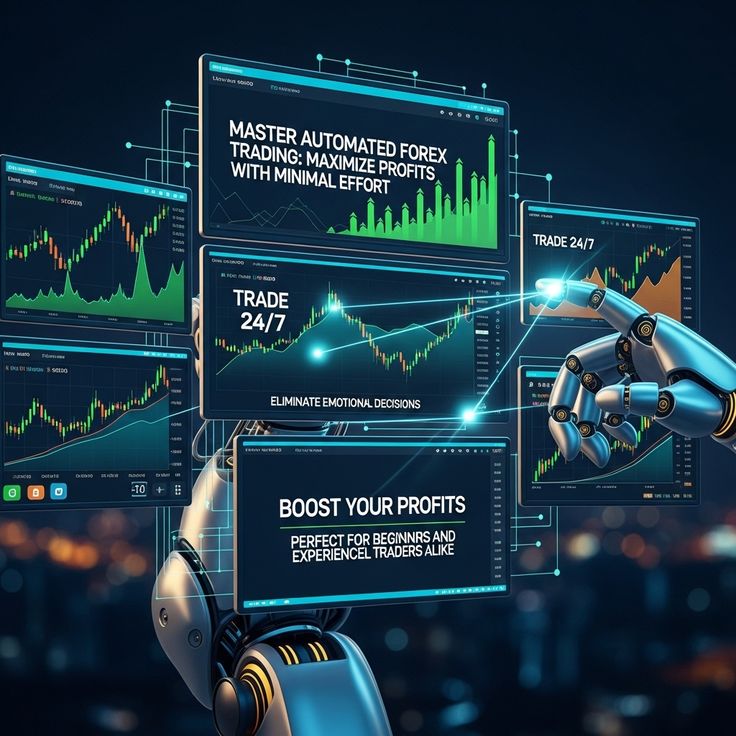
The foreign exchange market is the largest and most liquid financial market in the world. It operates 24 hours a day, five days a week, with price movements influenced by macroeconomic data, central bank policies, geopolitical events, and market sentiment. For individual traders, monitoring all of these factors continuously is practically impossible.
Automation addresses this challenge by allowing trading strategies to run continuously without fatigue. A robot forex system can analyze multiple currency pairs simultaneously, react instantly to price changes, and apply consistent risk management rules across all trades. This level of efficiency is difficult to achieve through manual trading alone.
Another key reason for the growth of robot forex trading is the desire to remove emotional decision-making. Fear, greed, hesitation, and overconfidence are common psychological obstacles that affect trading performance. A robot executes trades based on logic, not emotion, which can lead to more disciplined and repeatable outcomes.
How Robot Forex Systems Make Trading Decisions
At the core of every robot forex system is an algorithm. This algorithm defines the conditions under which trades are opened, managed, and closed. Some robots rely on simple strategies, such as moving average crossovers or support and resistance levels. Others use more complex models involving volatility filters, momentum analysis, or statistical probabilities.
More advanced robot forex systems incorporate machine learning techniques that allow the algorithm to adapt based on historical performance. These systems may adjust parameters dynamically in response to changing market conditions, although true adaptability remains one of the most difficult challenges in automated trading.
Regardless of complexity, no robot forex system can predict the future. All decisions are based on historical data and current market inputs. This limitation is critical to understand, as market conditions can change in ways that invalidate previously successful strategies.
The Role of Backtesting and Optimization

Before a robot forex system is deployed in live trading, it is typically tested using historical market data. This process, known as backtesting, allows traders to evaluate how the algorithm would have performed under past market conditions. Backtesting helps identify strengths, weaknesses, drawdowns, and periods of underperformance.
However, backtesting has limitations. Historical performance does not guarantee future results, especially in a market as dynamic as forex. Over-optimization, where a robot is excessively tuned to past data, can lead to poor real-world performance. A robust robot forex system must balance optimization with adaptability and risk control.
Forward testing, often conducted on a demo account, is another important step. This allows traders to observe how the robot behaves in real-time market conditions without risking capital. Only after thorough testing should a robot forex system be used with real funds.
Advantages of Using Robot Forex Systems
One of the primary advantages of robot forex trading is consistency. A robot applies the same rules to every trade, regardless of market conditions or previous outcomes. This consistency can help traders maintain a structured approach to the market.
Speed is another major benefit. Automated systems can execute trades within milliseconds, which is particularly valuable in fast-moving markets. This can reduce slippage and improve entry and exit precision.
Scalability is also a key advantage. A single robot forex system can manage multiple currency pairs and strategies simultaneously. For traders managing larger accounts or diversified strategies, automation can significantly reduce workload.
Finally, robot forex systems allow traders to implement strategies that would be impractical manually. High-frequency trading, complex statistical models, and multi-timeframe analysis are all areas where automation excels.
Risks and Limitations of Robot Forex Trading
Despite their advantages, robot forex systems are not risk-free. One of the most significant risks is lack of adaptability. Markets evolve due to changes in economic conditions, regulations, and participant behavior. A robot that performs well in one environment may struggle in another.
Technical failures are another concern. Internet outages, platform errors, API disruptions, or software bugs can result in missed trades or unintended executions. Without proper monitoring, such issues can lead to substantial losses.
There is also the risk of false expectations. Many traders assume that a robot forex system will generate profits automatically with little effort. In reality, successful automation requires ongoing supervision, performance evaluation, and periodic adjustments.
Additionally, third-party robot forex products often present exaggerated performance claims. Traders should approach such offerings with skepticism, especially when marketing emphasizes guaranteed returns or unrealistic profit consistency.
Creating and Managing a Robot Forex Strategy
Developing a robot forex system typically requires knowledge of trading principles, risk management, and programming. Common programming languages used in forex automation include MQL, Python, and C++. Some platforms now offer visual strategy builders that allow traders to create algorithms without writing code, though these tools still require a solid understanding of trading logic.
Once a robot is operational, management does not end. Market conditions must be monitored, performance metrics reviewed, and risk parameters adjusted as needed. Drawdowns should be analyzed carefully to determine whether they are within expected limits or indicate a deeper issue with the strategy.
Position sizing, stop-loss placement, and maximum exposure limits remain essential components of risk management, even in fully automated systems. A robot forex strategy without proper risk controls can fail quickly, regardless of how sophisticated its entry logic may be.
The Future of Robot Forex Trading
As artificial intelligence and data processing capabilities continue to advance, robot forex trading is likely to become even more sophisticated. Improvements in machine learning, natural language processing, and real-time data analysis may enhance the ability of automated systems to respond to complex market dynamics.
However, increased sophistication does not eliminate risk. Markets are influenced by human behavior, unexpected events, and structural changes that no algorithm can fully anticipate. Automation will continue to be a powerful tool, but it will not replace the need for human judgment and oversight.
For traders who approach robot forex trading with realistic expectations, disciplined risk management, and a commitment to continuous learning, automation can serve as a valuable component of a broader trading strategy.
Robot forex trading represents a significant evolution in how traders interact with the foreign exchange market. By automating execution and enforcing consistency, forex robots can enhance efficiency and reduce emotional bias. At the same time, they introduce new challenges related to adaptability, technical reliability, and risk control.
Understanding how robot forex systems work, what they can and cannot do, and how to manage them responsibly is essential for anyone considering automated trading. When used as a strategic tool rather than a shortcut to profit, robot forex systems can play a meaningful role in modern trading operations.