Blog
Blog  06-Feb-2026
.svg) 11,590
11,590 

When AI Becomes the New Competitive Advantage in Prop Trading
The global financial landscape is entering a period of profound transformation, where artificial intelligence (AI) is no longer an experimental technology but a core foundation of modern trading models. Across financial markets, AI is being integrated into decision-making processes, execution systems, and risk frameworks at an unprecedented scale. Among all segments, prop trading stands out as one of the areas most visibly and rapidly impacted by this technological shift.
In the past, prop trading relied heavily on personal experience, discretionary judgment, market intuition, and manually executed strategies. Success often depended on a trader’s ability to control emotions, interpret charts, and react quickly under pressure. Today, AI has introduced an entirely different paradigm. With superior processing speed, massive data-handling capacity, and increasingly accurate predictive models, AI is reshaping how traders design strategies, manage risk, and make trading decisions in fast-moving markets.
This article explores how AI is revolutionizing the prop trading industry and outlines practical strategies that help traders adapt, stay competitive, and grow sustainably in this new, technology-driven trading environment.
The Role of AI in Modern Prop Trading
The Role of AI in Modern Prop Trading
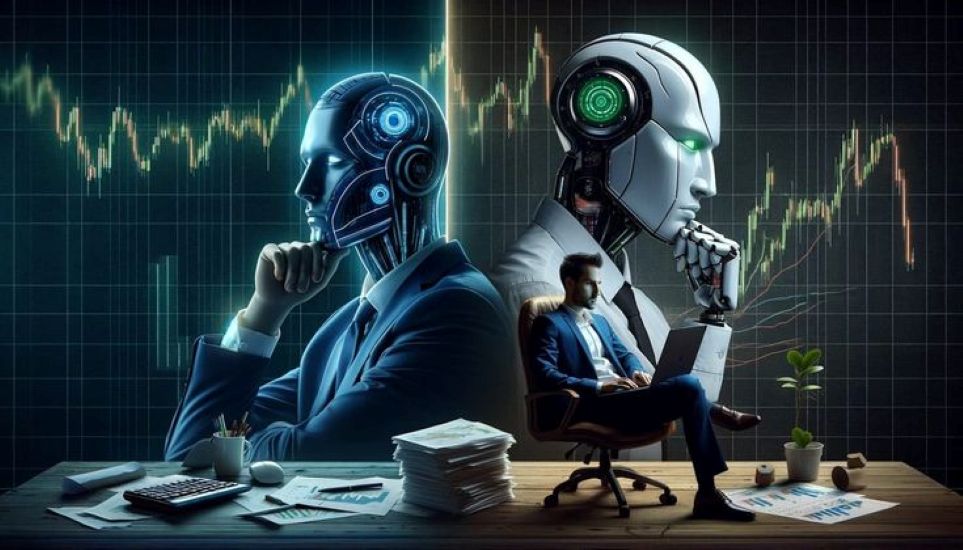
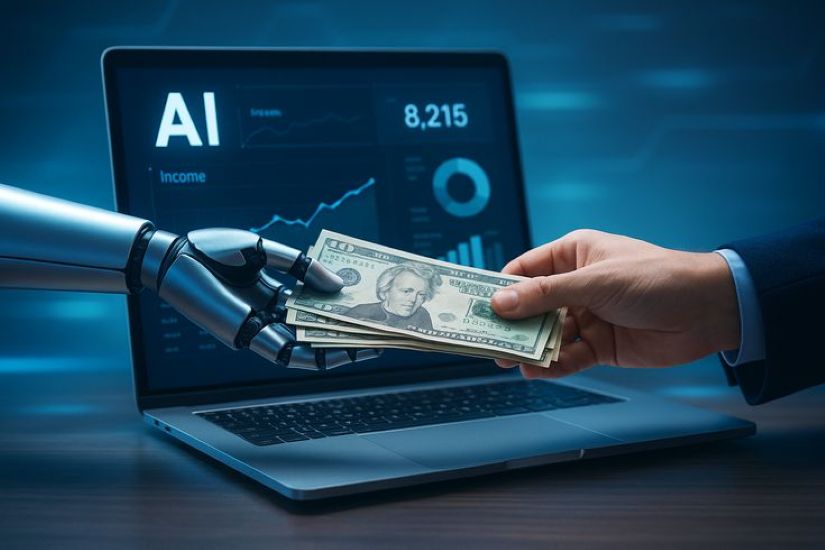
AI is no longer just a supporting tool; it is increasingly becoming a trader’s “second brain.” From market analysis to execution and risk control, AI systems now assist traders at nearly every stage of the prop trading workflow. Below are the key areas where AI is making a measurable and lasting impact on modern prop trading operations.
1. Advanced Data Analysis at Scale
In prop trading, data is the most valuable asset. AI enables traders and firms to process enormous volumes of information simultaneously, including historical price data, trading volume, real-time volatility metrics, intermarket correlations, and macroeconomic indicators. This level of analysis would be virtually impossible to perform manually with consistent accuracy.
Unlike traditional analysis, which is often constrained by human cognitive limits, AI can identify recurring price patterns with high precision, uncover hidden relationships across multiple markets, and forecast short-term and medium-term trends using probabilistic models. As a result, traders operating within prop trading systems can base their decisions on objective data insights rather than intuition or emotional bias.
2. Algorithmic Trading and Execution Speed
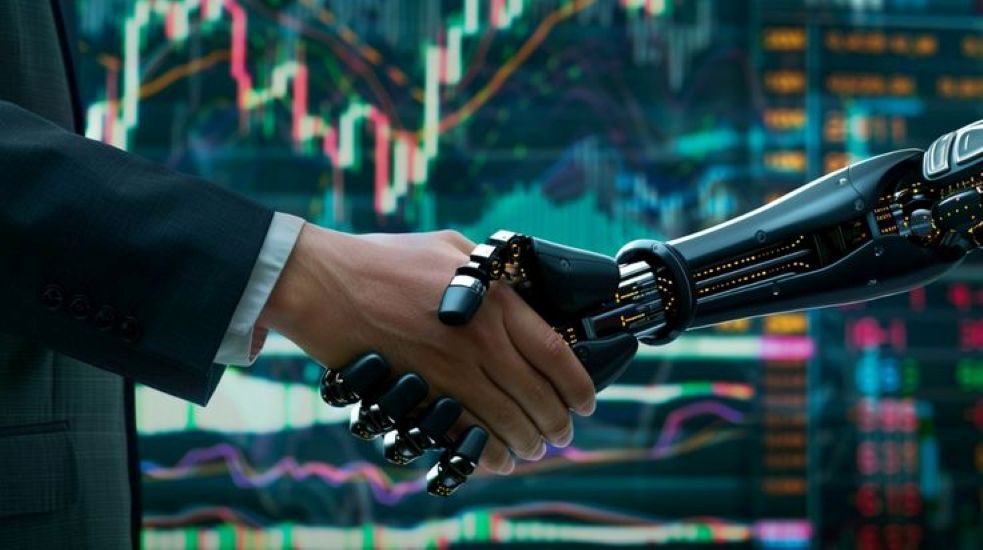
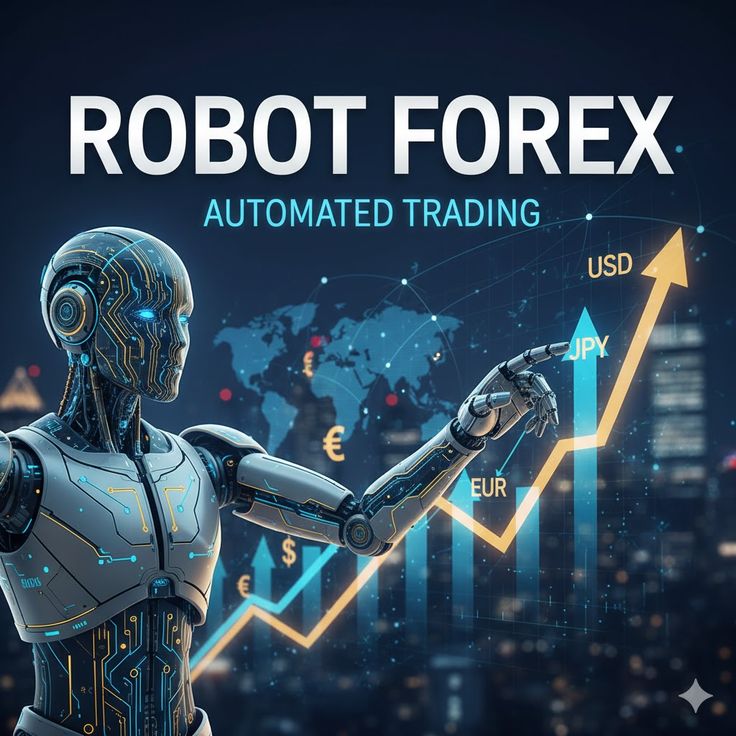
Algorithmic trading is one of the most common AI applications in prop trading
Algorithmic trading is one of the most widely adopted applications of AI in prop trading. These algorithms are designed to scan markets in milliseconds, detect trading opportunities that align with predefined strategies, and automatically execute entries and exits based on precise rule sets.
This capability is especially critical in the prop trading environment, where speed and discipline determine long-term survival. AI-driven execution eliminates hesitation, fear, and emotional interference such as FOMO—common causes of rule violations and account failures within prop firms. By enforcing consistency, AI helps traders stay aligned with their trading plans even during volatile market conditions.
3. Smarter and More Dynamic Risk Management
Risk management is the backbone of prop trading, and AI significantly enhances its effectiveness. AI-powered systems can monitor drawdown levels in real time, dynamically adjust position sizing based on market volatility, and suggest probabilistic stop-loss and take-profit levels. With AI, traders not only understand how much risk they are taking, but also why that level of risk is justified within a specific market context.
By incorporating volatility metrics, liquidity shifts, and historical regime behavior, AI models are able to recommend probabilistic stop-loss and take-profit levels that align with current market structure. This allows traders to move beyond arbitrary risk settings and toward data-driven justification for each trade. As a result, traders gain deeper clarity – not only on how much risk they are assuming, but also on why that level of risk is statistically reasonable within a given market context. Over time, this leads to more consistent performance and fewer catastrophic drawdowns, which are critical for long-term survival in prop trading.
4. Market Sentiment and News Analysis
Modern AI systems leverage natural language processing (NLP) to interpret news articles, financial reports, and social media sentiment. In prop trading, this enables real-time sentiment assessment, early detection of events likely to trigger market volatility, and proactive bias adjustment before price reactions become obvious. Instead of reacting late to breaking news, traders can prepare strategies in advance.
This enables traders to adjust their directional bias proactively rather than reacting after markets have already repriced. By integrating sentiment data with technical and quantitative signals, AI helps traders distinguish between noise and meaningful information. Instead of being caught off guard by unexpected volatility following major news events, prop traders can prepare strategic responses in advance—reducing emotional decision-making and improving execution quality during high-impact market periods.
Strategies for Leveraging AI to Succeed in Prop Trading
Strategies for leveraging AI to succeed in prop trading
While AI offers powerful advantages, it does not guarantee success on its own. Traders must understand how to integrate AI intelligently into their trading workflows.
1. Learn and Understand the Basics of Algorithmic Trading
Prop traders do not need to become professional software engineers, but understanding how algorithms function is a major advantage. Popular trading platforms such as MetaTrader, cTrader, TradeLocker, and MatchTrader all support automation tools that allow traders to deploy rule-based strategies efficiently.
Programming languages like Python or R enable traders to customize strategies, backtest them using historical data, and optimize performance across different market conditions. Today, learning these skills is more accessible than ever thanks to online resources and AI-assisted development tools.
2. Combine AI with Traditional Trading Analysis
AI should not completely replace human judgment. In prop trading, the highest performance comes from combining AI-driven data analysis and probability modeling with technical analysis for market structure and fundamental analysis for macroeconomic context. AI provides the broader picture, while the trader makes the final decision based on experience and discipline.
3. Commit to Continuous Learning and Adaptation
Both financial markets and AI technology evolve rapidly. Prop traders must stay updated on emerging AI trends, participate in professional communities, and continuously test and evaluate new AI tools. Flexibility and a strong learning mindset are essential for maintaining a long-term competitive edge.
4. Maintain Discipline and Personal Risk Limits
Even when AI provides accurate recommendations, traders must adhere to personal risk limits and prop firm rules. AI should be treated as a decision-support system, not a replacement decision-maker.
True consistency in prop trading emerges from the ability to balance AI-generated insights with disciplined execution. While AI can highlight high-probability setups, optimize entries, or suggest dynamic risk adjustments, it is the trader’s responsibility to enforce risk limits, maintain emotional control, and avoid overexposure. Discipline acts as the stabilizing force that prevents overreliance on technology, ensuring that AI enhances performance rather than amplifying risk.
Artificial intelligence is reshaping the entire prop trading industry – from data analysis and algorithmic execution to risk management and sentiment analysis. However, AI is not a magic solution.
The most successful traders in this new era are those who combine AI’s computational power with human experience, discipline, and strategic thinking. As AI continues to evolve, the advantage will belong to traders who are willing to adapt, learn, and apply technology intelligently. In an increasingly competitive prop trading landscape, AI is no longer optional – it is a fundamental requirement for long-term success.