Blog
Blog  02-Mar-2026
.svg) 185,915
185,915 


The Structural Shift in Prop Trading
The proprietary trading industry is undergoing a profound structural transformation after 2025, shifting away from high churn challenge fee models toward sustainable long term capital partnerships. Instead of depending heavily on one time evaluation fees, leading firms are now prioritizing trader retention, transparent payout structures, and scalable funding pathways. This professionalization wave emphasizes advanced AI driven risk management, stricter compliance frameworks, and superior technological infrastructure. The industry is no longer competing on marketing intensity alone but on operational durability and capital protection.
This reset did not occur randomly. Between 2020 and 2024, rapid expansion led to weak oversight, aggressive scaling promises, and excessive trader turnover, creating instability across the ecosystem. The resulting market shake out forced firms to reengineer their models toward sustainability and transparency. Many companies relocated operations to more structured regulatory environments such as Dubai or Singapore while tightening policies around high volatility news trading. The evolution resembles the maturation of the cryptocurrency sector after early speculative bubbles, where survival favored platforms that embraced governance and institutional discipline.
Another defining feature of this shift is the democratization of capital access. Traditional proprietary desks once operated exclusively from centralized financial hubs, limiting participation to institutional professionals. Today, remote infrastructure allows retail traders worldwide to manage six or seven figure allocations under structured evaluation programs. This transition mirrors the broader digitization of higher education, where elite knowledge once confined to physical campuses is now accessible globally through online platforms. In prop trading, access has expanded, but standards have simultaneously tightened.
Over the past five years, prop trading has transitioned from a capital allocation model driven largely by individual skill to an infrastructure powered by intelligent systems. Global search demand for prop firm related terms increased by more than 4,000 percent between 2020 and 2024, signaling rapid market expansion. Simultaneously, between 60 and 70 percent of equity market trades in developed economies are now executed algorithmically. These figures confirm that automation is no longer peripheral but central to financial execution. In prop trading, technology has evolved from support tool to operational backbone.
This structural shift mirrors transformations seen in other industries such as logistics, where predictive routing algorithms replaced manual planning to optimize efficiency. Just as companies like Amazon built dominance through data systems rather than warehouses alone, modern prop trading firms compete through analytical infrastructure rather than capital size alone. Intelligence architecture determines scalability and survival. The firms that integrate AI deeply into their systems operate with measurable structural advantages.
AI Driven Risk Management as a Defensive Shield
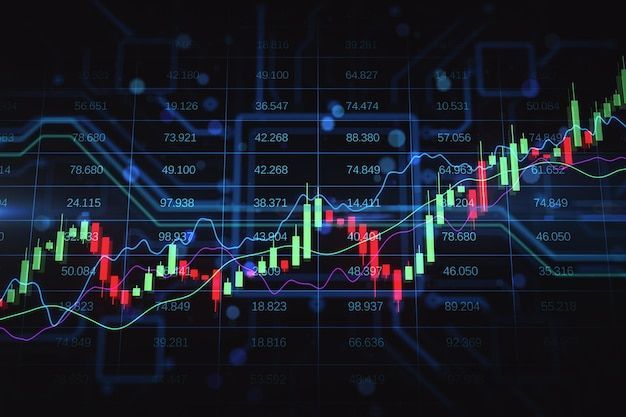
Risk management is the first domain where AI has fundamentally altered prop trading dynamics. Historically, trading violations were identified retrospectively, often after significant drawdowns had already occurred. Today, AI engines monitor floating losses, exposure concentration, and leverage usage in real time, triggering automatic interventions when predefined thresholds such as a 5 percent daily drawdown are breached. Industry data suggests that nearly 80 percent of failed proprietary trading operations collapsed due to weak risk oversight rather than flawed strategies.
This real time surveillance functions similarly to modern automotive safety systems, where onboard sensors detect instability and adjust braking force before drivers perceive danger. Instead of reacting to losses, AI anticipates structural risk buildup. In evaluation based prop trading models, where traders must meet strict profit targets while respecting tight drawdown limits, this proactive defense dramatically increases survival probability. Risk becomes a continuously managed variable rather than a post event statistic.
Algorithmic Execution and the Economics of Speed
Speed has become a decisive economic factor in prop trading. Financial markets react within milliseconds to macroeconomic releases, liquidity shifts, and geopolitical headlines. AI driven algorithms process order book data, volatility metrics, and cross asset correlations simultaneously while executing trades without hesitation. The global algorithmic trading market surpassed 15 billion dollars in value in 2021 and continues to grow at double digit annual rates, reflecting institutional commitment to automation.
This transformation resembles the automation of high frequency manufacturing lines, where machines replaced manual assembly to eliminate inconsistency. Even minor slippage reductions can determine whether a trader achieves an 8 or 9 percent evaluation target. In prop trading, execution precision compounds over hundreds of trades, turning small efficiency gains into decisive performance differences. AI ensures that entry and exit decisions align with statistical probabilities rather than emotional impulses.
Predictive Analytics and Forward Looking Intelligence
Scalability, Behavioral Discipline, and Long Term Advantage
AI integration allows prop trading firms to scale without sacrificing oversight quality. Many firms manage thousands of evaluation accounts simultaneously, each governed by strict capital rules and payout structures. Automated dashboards aggregate risk ratios, profit consistency metrics, and exposure distribution in real time across multiple asset classes. Operational studies indicate that AI implementation can reduce administrative costs by up to 30 percent while improving compliance accuracy.
Equally important is the psychological dimension. Behavioral finance research consistently shows that cognitive biases such as loss aversion and overconfidence undermine performance. AI systems enforce rule based discipline by flagging revenge trading, abnormal lot increases, or deviation from historical strategy profiles. This resembles digital health trackers that warn users when physiological stress indicators exceed safe limits, reinforcing discipline through objective measurement.
Ultimately, Artificial Intelligence has become the strategic infrastructure underlying modern prop trading firms. Capital alone no longer guarantees competitiveness; intelligent systems determine resilience, efficiency, and scalability. As markets continue to accelerate, firms that treat AI as foundational architecture rather than optional enhancement will define the next phase of industry leadership. In today’s prop trading environment, technological intelligence is not an accessory to performance, it is its defining core.