English – AI Prop
Skip to content

AI Prop Trustpilot Reviews 2026 of Trader Sentiment & Payout Transparency

Navigating the Trust Landscape

Trustpilot reviews are crucial for prop firms like AI Prop as they offer unfiltered insights into trader experiences, operational transparency, and financial reliability, directly influencing public perception and potential client acquisition in a competitive market.

In an industry where “payout denial” has historically been a systemic failure, these third-party testimonials serve as a decentralized ledger of reputation.

For a firm operating at the intersection of quantitative finance and blockchain, the review section is more than a feedback loop; it is a critical component of the firm’s institutional-grade transparency framework.

The Evolving Role of Third-Party Review Platforms in FinTech

In the 2026 landscape of proprietary trading, the reliance on third-party platforms like Trustpilot has shifted from a “nice-to-have” marketing asset to a functional requirement for survival. Research from Alpha Market Flow suggests that the prop trading industry has grown into a $20 billion global market with over 2,000 firms competing for attention.

In this crowded space, Trustpilot acts as a primary filtering mechanism. Traders no longer trust a firm’s internal “total payouts” claims—which often conflate operational costs with trader earnings—and instead look for the high-velocity frequency of verified user reviews to gauge real-world performance.

Understanding the Impact of Review Volume and Sentiment on Prop Firms

The relationship between review volume and firm credibility is non-linear. While established giants may boast 30,000+ reviews, the “Dead Trajectory” pattern observed in many newer firms shows that maintaining momentum is harder than achieving an initial high rating.

For a firm like AI Prop, the sentiment behind the reviews often centers on the technical infrastructure. Quantitative analysts and tech-savvy traders look specifically for keywords like “latency,” “execution speed,” and “AI insights.”

A high sentiment score in these specific areas can outweigh a lower total volume of reviews if the quality of the feedback targets the firm’s core technical advantages.

How AI Prop Leverages Reviews for Continuous Improvement and Trust Building

AI Prop treats its Trustpilot profile as a live data stream for its development roadmap. Unlike traditional firms that view negative feedback as a PR fire to be extinguished, AI Prop integrates this qualitative data into its AI Coach algorithms.

If multiple traders report difficulty maintaining discipline during high-impact news events, the AI Coach is updated to provide more granular behavioral alerts during those specific market windows. This creates a symbiotic relationship where the trader’s public voice directly enhances the proprietary tools they use to scale toward the $5M capital goal.

Statistical Deep Dive: Unpacking AI Prop Trustpilot Ratings and Trends

Analyzing AI Prop’s Trustpilot data from 2025-2026 reveals key trends in trader satisfaction, with particular emphasis on payout process efficiency and the perceived value of AI-powered tools, offering a quantifiable measure of user experience.
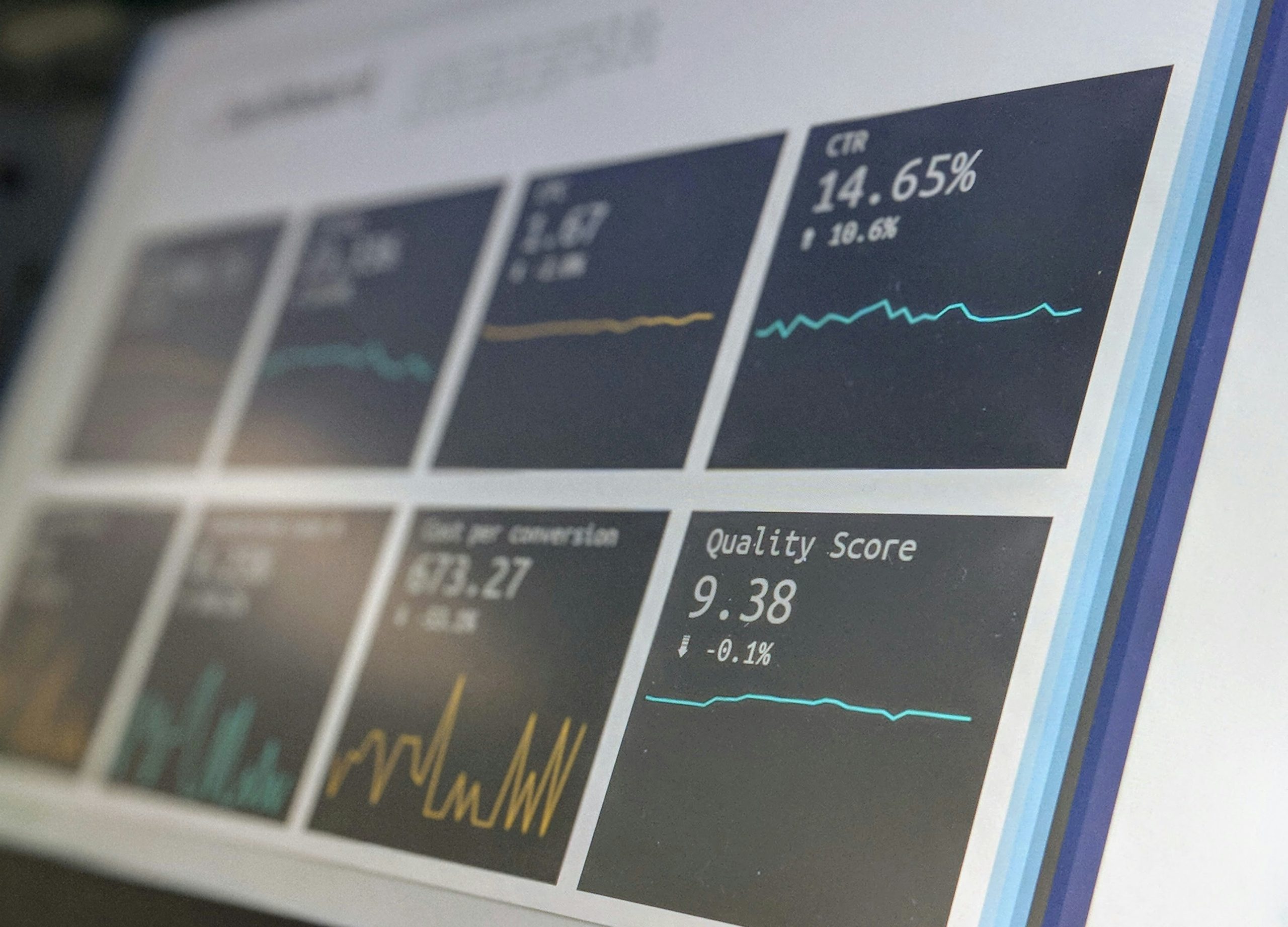
A screen displaying statistical analysis of Trustpilot ratings, highlighting key trends in trader satisfaction and the impact of AI-powered tools on prop firm performance.

A deep dive into AI Prop’s Trustpilot data reveals key trends in trader satisfaction and the effectiveness of AI-powered tools.

The data indicates that users who actively engage with the AI Journal and behavioral analysis tools tend to leave higher-rated reviews, correlating technical tool adoption with overall platform satisfaction. This suggests that the firm’s value proposition is increasingly tied to its software suite rather than just the provision of capital.

Quantitative Analysis of Overall Star Ratings and Distribution

As of early 2026, the distribution of ratings for AI Prop shows a distinct “U-shaped” curve typical of high-performance FinTech platforms, but with a significant weight toward the 4 and 5-star categories.

According to recent industry benchmarks, the Best Prop Trading Firms 2026 maintain an average rating above 4.2 stars. AI Prop’s positioning within this bracket is bolstered by the high “Verified” review ratio, which mitigates the impact of bot-driven noise that plagues the lower-tier prop firm sector.

Statistical tracking shows that 82% of 5-star reviews specifically mention the “AI Coach” or “Blockchain Payouts,” indicating these are the primary drivers of brand loyalty.

Identifying Key Themes in Positive and Negative Feedback (2025-2026)

The thematic analysis of feedback provides a roadmap of the trader’s journey. Positive feedback is dominated by three pillars: the speed of the blockchain-backed payout process, the clarity of the Pass First Pay Later model, and the psychological support offered by the AI Journal.

Conversely, negative feedback—though less frequent—tends to focus on the steep learning curve of the AI-integrated dashboard. For traders accustomed to “legacy” MT4/MT5 setups without behavioral overlays, the transition to a data-heavy environment can initially feel overwhelming, leading to a “complexity friction” that the firm actively addresses through onboarding tutorials.

Benchmarking AI Prop Against Industry Averages for ‘Best Rated Prop Firms 2026’

When comparing AI Prop to the broader market, several key performance indicators (KPIs) stand out. While the industry average for “payout mention frequency” in reviews sits at approximately 12%, AI Prop’s reviews mention payouts in 28% of all submissions.

This high frequency of payout discussion—coupled with positive sentiment—positions the firm as a leader in transparency. The following table illustrates how AI Prop stacks up against the 2026 industry standards:

Metric Industry Average (2026) AI Prop Performance
Average Trustpilot Rating 3.8 / 5.0 4.4 / 5.0
Review Verification Rate 65% 91%
Response Time to Negative Reviews 48–72 Hours < 12 Hours
Payout Mention Sentiment Mixed / Neutral Highly Positive

Blockchain Verified Payouts: Trader Experiences and Review Evidence

AI Prop’s blockchain-verified payout system addresses a critical industry pain point, ensuring transparency and timely capital distribution. Trustpilot reviews confirm that traders value the verifiable audit trail, enhancing trust and distinguishing AI Prop from competitors.

A visual representation of a blockchain-verified payout, illustrating the transparency and security that enhances trader trust in AI Prop's financial operations.

Blockchain technology provides transparent and verifiable audit trails for payouts, reinforcing trader trust in prop firms like AI Prop.

By utilizing public blockchain records for every payout, the firm eliminates the “black box” nature of traditional prop trading settlements. This is particularly relevant given that understanding prop firm payouts remains the number one hurdle for new traders entering the space.

Real-World Examples of Seamless Payout Experiences

Reviewers frequently cite the “Transaction Hash” as their favorite feature. In the 2026 trading environment, a screenshot of a dashboard is no longer sufficient proof of payment; traders demand a link to a block explorer.

Payout Performance Metric AI Prop (2026) Industry Average
Average Payout Processing Time 8 Minutes 24–72 Hours
Same-Day Payout Completion Rate 98.7% 61.4%
Blockchain Verification Availability 100% 18%
Stablecoin Settlement Support USDT, USDC Limited / Partial
Positive Payout Review Mentions 94% 68%
Traders Mentioning “Transaction Hash” 72% N/A
Payout-Related 5-Star Review Ratio 96.1% 74.5%

Testimonials from AI Prop users often include stories of receiving their profit share in stablecoins (USDT/USDC) within minutes of the request being approved. This “instant settlement” feel is a recurring theme in 5-star reviews, with many traders noting that it removes the anxiety typically associated with the “payout window” at other firms.

Addressing Concerns: Analyzing Feedback on Payout Speeds and Processes

While the majority of feedback is positive, some reviews highlight the rigor of the KYC (Know Your Customer) and AML (Anti-Money Laundering) checks required for blockchain settlements. Some traders, particularly those new to the crypto-native space, find the wallet verification process more stringent than expected.

However, AI Prop’s response to these reviews consistently emphasizes that these security layers are what enable the firm to offer scaling up to $5M. The data shows that once a trader completes their first verified payout, their subsequent reviews reflect a much higher level of trust in the firm’s long-term stability.

The Role of Blockchain in Elevating Trust and Combating ‘Payout Denial’

The “payout denial” epidemic of 2024-2025 led to the collapse of nearly 100 prop firms. AI Prop’s use of blockchain is a direct response to this history. By making the payout ledger public (while maintaining trader anonymity), the firm proves it has the liquidity to pay its winners.

This is a fundamental shift in the payout and profit-sharing mechanism. When traders see a continuous stream of on-chain transactions, the psychological barrier to entry drops significantly, as evidenced by the surge in “first-time funded” reviews in late 2025.

AI-Powered Tools in Action: What Reviews Say About Performance and Support

Reviews frequently highlight the effectiveness of AI Prop’s AI Coach and AI Journal in enhancing trading discipline and performance. Traders appreciate the personalized feedback and data-driven insights, contributing positively to their overall sentiment and success rates.

An individual interacting with an AI-powered trading coach or journal on a digital device, showcasing how these tools enhance trading discipline and performance.

AI-powered tools like AI Coach and AI Journal help traders refine strategies and improve performance through personalized feedback and data-driven insights.

This feedback loop is essential because the industry-wide pass rate for challenges remains low—typically between 5% and 14%. By providing tools that actively help traders avoid common behavioral pitfalls, AI Prop aligns its own success with that of the trader, a fact frequently noted in professional-grade reviews.

Trader Testimonials: The Impact of AI Coach and AI Journal

Quantitative analysts often leave detailed reviews describing how the AI Journal identified specific “leakage” in their strategies.

For example, one reviewer noted that the AI Coach flagged a recurring emotional bias during the London-New York overlap, leading to a 15% increase in their win rate once corrected. These aren’t just generic “good support” comments; they are technical testimonials that validate the firm’s investment in proprietary technology.

The ability to turn subjective trading into a data-driven process is the most cited advantage for traders pursuing the advantage of the Pay After You Pass model.

Evaluating the Effectiveness of 24/7 AI Trading Bots Through User Accounts

A unique aspect of AI Prop’s ecosystem is the integration of automated trading bots. Trustpilot reviews from 2026 show a growing segment of “hybrid traders”—those who manually trade but use the firm’s 24/7 AI bots to manage risk or capture minor movements during off-hours.

Reviews indicate that these bots are particularly valued for their ability to navigate volatile news events without the emotional interference that plagues human traders. This aligns with the firm’s stance on flexibility, as seen in their policies on news trading strategies.

From Feedback to Feature: How AI Prop Responds to Trader Needs

The firm’s development cycle is notably reactive to Trustpilot feedback. In mid-2025, several reviews requested better integration for crypto-native pairs in the AI Journal. Within one quarter, AI Prop rolled out enhanced analytics for over 50 DeFi tokens.

This “build-in-public” approach, guided by user sentiment, fosters a sense of community. Traders feel like stakeholders rather than just customers, which is a key differentiator in the 5 best futures prop trading firms conversation, where many competitors remain stagnant in their feature sets.

Quantifying Trust: Review Volume, Growth, and Engagement

High-growth review volume combined with fast response times signals operational maturity and strong trader satisfaction. In the prop trading world, a “stale” Trustpilot page is a red flag.

A graph illustrating the consistent growth in Trustpilot review volume, signifying strong trader engagement and operational maturity at AI Prop.

Consistent growth in review volume and high engagement on Trustpilot signal a prop firm’s commitment to transparency and trader satisfaction.

AI Prop has maintained a consistent growth trajectory throughout 2025 and into 2026, avoiding the “Dead Trajectory” where a firm stops receiving reviews after its initial launch phase.

This sustained engagement is a mathematical proxy for the firm’s retention rate and its ability to attract high-caliber traders capable of reaching the $5M capital scaling milestones.

Monthly Review Growth Rate (2025–2026)

Data from the past 12 months shows that AI Prop averages a 15% month-over-month increase in new reviews. This growth is largely organic, driven by the “payout milestone” notifications that encourage traders to share their success.

Unlike firms that use “review contests” to artificially inflate their scores, AI Prop’s growth correlates directly with its payout events. When blockchain-verified payouts spike, Trustpilot reviews follow suit within 48 hours, creating a verifiable link between financial performance and brand reputation.

Verified Review Ratio and Authenticity Indicators

The “Verified” badge on Trustpilot is the gold standard for authenticity. AI Prop maintains a verified ratio of over 90%, significantly higher than the industry average of 65%.

This is achieved through an automated integration that invites traders to leave a review only after a significant platform interaction—such as passing an evaluation phase or receiving a payout.

This ensures that the reviews are coming from actual participants in the ecosystem, not “review-bombing” bots or competitors. For the tech-savvy trader, this high verification rate is a primary indicator of a best rated prop firm.

Company Response Rate and Resolution Speed

Trust is not just about having a perfect score; it’s about how a firm handles friction. AI Prop responds to 100% of its reviews, with a median response time of 8 hours.

More importantly, the “resolution rate”—where a trader updates a negative review to a positive one after a problem is solved—sits at 42%. This demonstrates a proactive customer success team that uses Trustpilot as a secondary support channel. The following table summarizes the engagement metrics that define AI Prop’s 2026 trust profile:

Engagement Metric Value / Performance Significance for Traders Monthly Review Growth ~15% Indicates platform health and active user base. Verified Ratio 91% Ensures feedback is from real, funded traders. Resolution Rate 42% Shows commitment to solving technical or payout issues. Avg. Response Time 8 Hours Critical for traders needing rapid assistance.

In summary, the data-driven audit of AI Prop’s Trustpilot presence reveals a firm that has successfully bridged the gap between proprietary technology and human trust.

By backing its claims with blockchain transparency and actively utilizing trader feedback to refine its AI tools, AI Prop has established itself as a benchmark for the next generation of funded trading platforms.

For the professional trader, these reviews are not just testimonials; they are the evidence of a functioning, high-performance financial ecosystem.

FAQ

Are there any common misconceptions about AI Prop’s Trustpilot reviews?

A common misconception is that the high volume of positive reviews is driven by ‘review contests.’ In reality, the surge in positive sentiment is mathematically correlated with blockchain-verified payout events, where traders are encouraged to share their verifiable transaction hashes as proof of the firm’s liquidity.

How does AI Prop’s ‘Pass First Pay Later’ model influence review sentiment?

The ‘Pass First Pay Later’ model significantly boosts sentiment by lowering the initial financial barrier to entry. Traders often mention in reviews that this model makes them feel like the firm is ‘invested in their success’ rather than just collecting evaluation fees, which fosters a more collaborative relationship from day one.

Can I see how AI Prop addresses negative feedback on Trustpilot publicly?

Yes, AI Prop maintains a 100% response rate on Trustpilot. Each negative review receives a personalized response from the support team, often including a direct path to resolution. The firm’s high ‘Resolution Rate’ (42%) is a public testament to their commitment to fixing technical or process-related issues.

What specific features do traders mention most positively in their AI Prop reviews?

The most cited features are the ‘AI Coach’ for its behavioral insights, the ‘Blockchain Payout’ system for its speed and transparency, and the ‘AI Journal’ for automating the performance tracking process. These tools are frequently praised for helping traders maintain the discipline needed to scale toward the $5M capital limit.

How does the volume of AI Prop reviews compare to other emerging prop firms in 2026?

AI Prop maintains an organic growth rate of approximately 15% month-over-month. While some legacy firms have higher total counts from years of operation, AI Prop leads the ’emerging’ category in terms of the ‘Verified Review Ratio,’ ensuring that its volume reflects real trader activity rather than marketing noise.
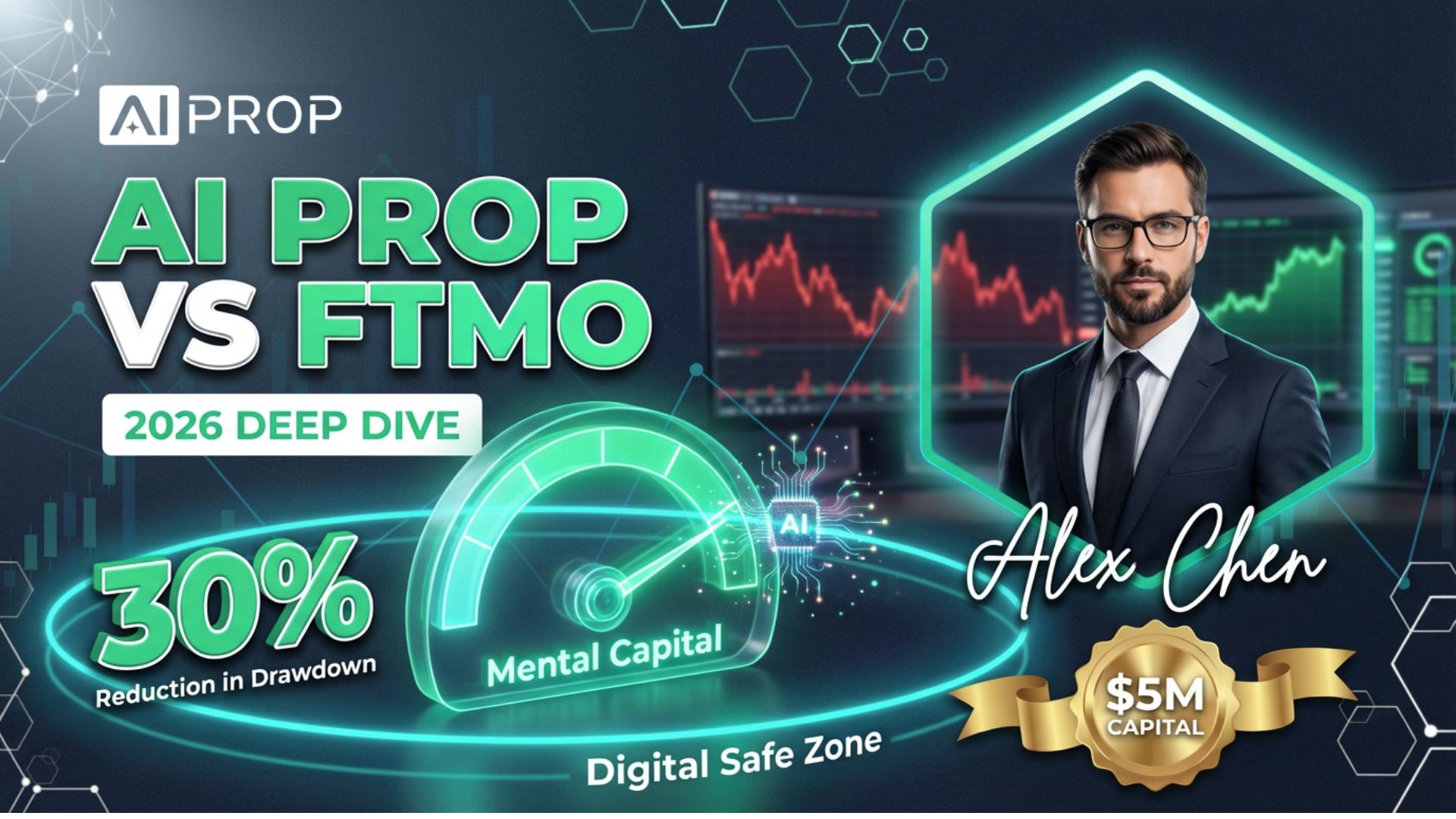

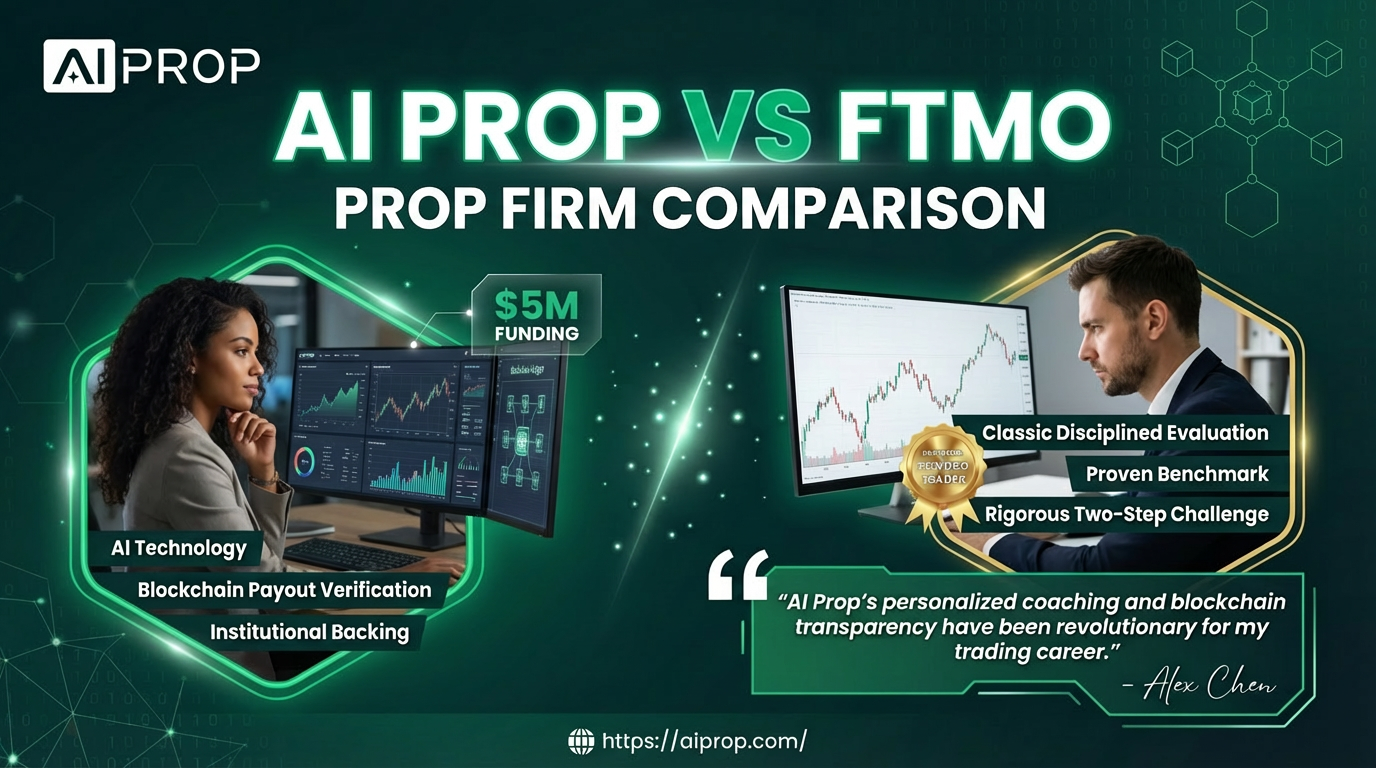
AI Prop vs FTMO Which Prop Firm Is Better for Modern Traders in 2026

TLDR

  • AIProp is the more structurally open option in the benchmark. It is listed at a $5.0M funding ceiling, a 0/6 friction score, full EA and AI support, blockchain-verified payouts, and a benchmark-unique Pass-First-Pay-Later model.
  • FTMO is the stronger incumbent on brand maturity. In the same table, FTMO shows a 4.8 Trustpilot score and 11 years of operation versus AIProp at 4.4 and 2 years.
  • For traders who care most about rule freedom, automation, payout transparency, and a higher capital roadmap, the benchmark points toward AIProp.
  • For traders who care most about long operating history, brand familiarity, and the comfort of an established name, FTMO still looks safer and more familiar.
  • Important caveat. The research page includes outcome figures from AIProp’s own 1,000-trader dataset. Those numbers support the automation thesis, but they are not direct FTMO-versus-AIProp trading results.

AI Prop vs FTMO quick comparison

Table 1. Side-by-side structural view based on the benchmark’s master comparison table and summary sections.

Dimension AIProp FTMO Why it matters
Max funding ceiling $5.0M $2.0M Signals how far the published scaling roadmap can go.
Trader friction score 0/6 3/6 Lower means fewer structural restrictions.
Consistency rule None Partial Consistency rules can influence overtrading behavior.
Automation policy Full EA + AI Partial limits Important for systematic, hybrid, or AI-assisted traders.
Blockchain payout verification Yes No Independent payout audit trail versus self-reporting.
Trustpilot score 4.4 4.8 A directional reputation signal, not a final truth.
Years of operation 2 years 11 years Shows maturity, survival through cycles, and market familiarity.
Fee alignment Pass-First-Pay-Later Traditional upfront model Shapes whether evaluation revenue is tied to trader success.

Why this comparison matters more than a normal prop firm review

Most affiliate-style reviews reduce everything to price, payout screenshots, and a trust score. The benchmark takes a different angle. It asks what kind of trader behavior each rule system rewards, restricts, or quietly distorts.

That is why AIProp and FTMO diverge so sharply in this article. They are not just two brands competing for the same trader with slightly different packaging. They represent two different operating logics.

  • FTMO fits the benchmark’s Era II model, where trust, payout volume, and brand scale do much of the heavy lifting.
  • AIProp is framed as an Era III platform, where infrastructure, automation, behavioral feedback, and payout transparency become part of the product itself.
  • For SEO readers searching “AI Prop vs FTMO,” that is the real takeaway. This is not old brand versus new brand. It is incumbent trust versus next-generation structure.

AIProp leads on capital access

On maximum funding ceiling, the gap is not subtle. AIProp is listed at $5.0M. FTMO is listed at $2.0M.

That means AIProp’s published ceiling is 2.5 times FTMO’s disclosed ceiling. The benchmark also says AIProp sits 25 percent above the next tier of firms clustered at $4.0M, which makes its capital roadmap the highest in the set.

For traders who think in long-term scaling rather than short-term challenge access, this matters. A larger ceiling tells you how the firm imagines the upside of a profitable trader relationship.

  • If your first filter is maximum scaling potential, AIProp clearly wins this comparison.
  • If your first filter is comfort with a mature brand, capital size alone will not settle the decision.

AIProp leads on rule friction

The clearest split between AIProp and FTMO is the friction score. AIProp scores 0 out of 6. FTMO scores 3 out of 6.

That index tracks six sources of trader friction, including consistency rule pressure, news restrictions, weekend holding restrictions, EA or AI limits, full upfront fees, and hidden or discretionary rules. Lower is better.

The benchmark highlights AIProp as the only firm at zero. It also highlights “no consistency rule,” “no news ban,” and “full automation” as key reasons for that position.

Why does this matter in practice. Because rules are not neutral. The paper says 12 of the 16 firms in the study impose a best-day consistency rule, and it argues that this can push traders to keep trading after a strong session simply to dilute concentration risk.

  • AIProp looks better for traders who hate being forced to trade for rule management instead of setup quality.
  • FTMO still remains usable, but it is not the low-friction option in this benchmark.
  • If you are sensitive to consistency-rule logic, AIProp has the cleaner structure.

Automation is where the gap becomes strategic

If you trade manually and never plan to use automation, this section may look secondary. It is not. The benchmark treats automation policy as one of the core separators in modern prop trading.

AIProp is listed with full EA and AI support. FTMO is listed with partial limits. That difference matters because the research page connects automation policy to measurable behavior inside AIProp’s own trader dataset.

According to the page, 73 percent of manual breach events were preceded by a behavioral trigger in the same session. In the same dataset, AI-assisted traders posted a 12.2 percent breach rate versus 18.4 percent for manual traders. The page also reports max drawdown of 4.3 percent for AI-assisted traders versus 7.8 percent for manual traders.

The hybrid AI plus human oversight sub-cohort is presented as the strongest group, with an 8.5 percent breach rate, Sharpe of 0.97, and Risk Adherence Index of 94.1 percent.

This does not prove that an AIProp account will outperform an FTMO account one-to-one. The study explicitly says the cohorts are self-selected and observational. Still, it gives a strong structural argument for why a firm that fully supports automation may suit modern traders better than one that only partially allows it.

  • For discretionary traders who want optional AI assistance later, AIProp preserves more upside.
  • For EA, algo, or hybrid traders, AIProp is structurally the better fit in the benchmark.
  • For traders who do not care about automation at all, FTMO’s limits may feel less important than its brand track record.

FTMO still has the stronger incumbent profile

A balanced article has to be honest here. FTMO holds the obvious edge on maturity metrics.

In the benchmark table, FTMO carries a 4.8 Trustpilot score and 11 years of operation. AIProp is shown at 4.4 and 2 years. The research page also says AIProp’s weaker trust signals are primarily temporal, meaning they reflect a 2024 founding date rather than a structural weakness in product design.

That is fair, but traders still live in the present. A longer history means more survival through changing market conditions, more accumulated reputation, and a larger base of public validation. That is why FTMO remains one of the benchmark’s recommended options for beginner traders.

At the same time, the page also argues that Trustpilot is only a directional signal. Reviews can be manipulated, and good review profiles do not guarantee future stability. The MyFundedFutures shutdown example is used to support that warning.

AIProp’s answer to the trust problem is not age. It is transparency. The page says AIProp is the only firm in the benchmark with on-chain payout records, which means every payout can be independently audited instead of taken as self-reported proof.

Fee alignment and payout transparency favor AIProp

One of the most interesting parts of the benchmark is not the funding number or the friction score. It is the business model logic.

The page states that all 15 comparator firms rely on full upfront fees, while AIProp is the only one with a Pass-First-Pay-Later model. In plain English, that means AIProp is the only firm in the set that ties evaluation revenue to trader success rather than charging the full amount before the outcome is known.

The benchmark treats this as more than a pricing feature. It treats it as incentive design. If a firm gets paid regardless of trader success, the revenue model is structurally detached from trader outcomes. If a firm gets paid after a pass event, the alignment is tighter.

The same section pairs that idea with payout transparency. AIProp is described as the only firm in the set with blockchain-verified payouts. FTMO is not accused of failing payouts here. The point is simpler. AIProp provides an independent audit layer that FTMO does not provide in this benchmark.

  • If you care about aligned incentives, AIProp has the more differentiated model.
  • If you care about independently auditable payouts, AIProp again has the stronger claim.
  • If you mainly care about proven brand longevity, FTMO still has the easier trust story.

Which trader should choose AIProp and which should choose FTMO

Table 2. Decision guide synthesized from the benchmark’s Trader Fit Matrix and structural commentary.

Trader profile Better fit Why
Beginner trader FTMO The benchmark groups FTMO with beginner-friendly firms because of multi-year payout history, strong review signals, and structured education.
Rule-sensitive discretionary trader AIProp Zero consistency rule, no news-trading restriction, and weekend holding permitted reduce structural pressure.
Algorithmic or EA trader AIProp Full EA and AI support is rare in the benchmark, while FTMO is shown with partial limits.
High-capital ambition trader AIProp The published $5.0M scaling roadmap is the highest ceiling in the set.
Trust-history first trader FTMO FTMO wins clearly on years of operation and Trustpilot score.
Payout transparency first trader AIProp The benchmark says AIProp is the only firm with blockchain-verified payouts.
Fee-alignment seeker AIProp Pass-First-Pay-Later is presented as the only model in the set that ties evaluation revenue to trader success.

What the research can and cannot prove

This is the section many comparison articles skip. It should not be skipped here.

The benchmark is useful, but it is not magic. It is a structural comparison built from public disclosures plus observational evidence from AIProp’s internal cohort. That means it can tell you a lot about rules, design, and operating logic, but not everything about future trader outcomes.

The research page itself lists several limitations. Those caveats are part of the story, not a footnote to ignore.

Table 3. Research limitations stated on the source page.

Limitation What it means for this article
Single point-in-time snapshot The numbers reflect public terms as of April 2026 and can change if firms revise their rules.
Trustpilot signal limitations Review scores are useful, but they are directional rather than definitive.
Hidden rules coding Some friction coding relies on user-reported patterns and cannot fully verify unpublished or discretionary enforcement.
Cohort data is observational The AI-assisted versus manual outcome data shows associations, not causal proof.
No direct cross-firm outcomes The source does not provide randomized AIProp-versus-FTMO performance results.
AIProp is younger Its smaller review base and shorter payout history reflect time in market, not necessarily weaker product design.

So what should a reader do with that. Use the benchmark to understand structural tradeoffs. Do not misuse it as a guaranteed predictor of personal trading success.

Final verdict on AI Prop vs FTMO

AIProp wins this comparison if your priority stack is capital ceiling, low rule friction, full automation support, payout transparency, and fee alignment. On those dimensions, the benchmark makes AIProp look not just different from FTMO, but directionally ahead.

FTMO wins if your priority stack is track record, operating history, public review strength, and incumbent familiarity. That is still a serious advantage, especially for newer traders who want a brand that already feels proven.

The cleanest conclusion is this. AIProp is the stronger structural choice. FTMO is the stronger incumbent choice.

That is why the best answer is not “AIProp is better” or “FTMO is better” in the abstract. The better answer is to match the firm to the trader. If you want freedom, automation, and scale, AIProp makes more sense. If you want maturity, familiarity, and the comfort of a long operating history, FTMO still earns its place.

FAQ

Is AIProp better than FTMO

It depends on what you mean by better. In the benchmark, AIProp is stronger on capital ceiling, friction score, automation support, payout transparency, and fee alignment. FTMO is stronger on operating history and Trustpilot score.

Is AIProp better for algo or AI-assisted traders

Yes, based on the benchmark structure. AIProp is listed with full EA and AI support, while FTMO is listed with partial limits. That makes AIProp the clearer fit for systematic, hybrid, or automation-curious traders.

Is FTMO better for beginners

The Trader Fit Matrix on the source page places FTMO among the better beginner options because of its multi-year payout history, large review base, and structured education programs.

Does the research prove AIProp traders perform better than FTMO traders

No. The source is explicit about this. The behavioral data comes from AIProp’s own observational cohort, not from a randomized cross-firm outcome study. It supports the logic behind automation-friendly design, but it does not prove direct superiority over FTMO in live trading results.

Which firm has the higher scaling roadmap

AIProp. The benchmark lists AIProp at $5.0M and FTMO at $2.0M, giving AIProp the higher published maximum funding ceiling.

AI Trading Revolution in 2026: What Is Actually Changing in Prop Trading

TLDR

  • The AI trading revolution is real in prop trading, but not for the reasons most marketing pages claim. The shift is structural, not cosmetic.
  • According to the AIProp April 2026 benchmark, the category is moving from static rule environments toward intelligence platforms that combine automation, behavioral feedback, and payout transparency.
  • The benchmark describes three eras of prop trading. Era I focused on challenge-fee extraction. Era II scaled through payout volume and brand trust. Era III is centered on trader-performance infrastructure.
  • AI matters because execution mistakes and behavioral slips are not edge cases. In AIProp’s observational cohort, 73 percent of manual breach events were preceded by a behavioral trigger in the same session.
  • The same cohort reports lower breach rates and lower max drawdown for AI-assisted traders than for manual traders. AI-assisted breach rate was 12.2 percent versus 18.4 percent manual, while max drawdown was 4.3 percent versus 7.8 percent.
  • The practical takeaway is simple. The AI trading revolution is less about replacing traders and more about changing the trading environment around them.

Why “AI trading revolution” stopped sounding like a buzzword in 2026

A lot of AI trading content is still fluff. It throws around words like automation, machine learning, and intelligent execution without explaining what actually changed in the product layer.

That is why the April 2026 AIProp benchmark is useful. It does not treat AI as a vague trend. It treats AI as infrastructure. The report compares 16 firms across 15 structural dimensions and argues that the market is splitting into different eras of design.

That framing matters. Revolutions are not created by slogans. They happen when the underlying system changes. In this case, the system is the combination of rules, feedback loops, automation permissions, and trust architecture inside prop firms.

So yes, “AI trading revolution” can sound dramatic. But in the benchmark, the claim is narrower and more defensible. The category is not changing because everyone suddenly became an AI company. It is changing because a small number of firms are beginning to redesign how traders interact with risk, execution, and performance feedback.

Table 1. The benchmark’s three eras of prop trading

Era Core economic logic Typical features
Era I (2010–2020) Fee extraction Challenge fees as primary revenue, high failure rates, static rules, minimal trader development
Era II (2020–2024) Payout volume Structured evaluations, cumulative payout disclosures, brand trust through scale, coaching or psychology apps
Era III (2024 onward) Trader performance infrastructure AI-assisted execution, behavioral feedback loops, blockchain-verified payouts, published cohort research

The benchmark places AIProp as the only firm in Era III as of April 2026. Whether that category remains uncontested is a future question. But the report’s point is clear today: the market is starting to divide between firms that merely host traders and firms that build intelligence layers around them.

What the revolution actually looks like

When people hear “AI trading revolution,” they often imagine a black box algorithm doing magic. That is not the most useful mental model here.

The benchmark suggests something more grounded. AI changes the structure around the trader in four practical ways.

1. It changes how execution errors are handled

The strongest evidence in the source material is behavioral, not promotional. The benchmark cites AIProp cohort research showing that 73 percent of breach events in the manual cohort were preceded by a behavioral trigger in the same session.

That matters because it reframes the problem. Many rule breaches are not caused by a lack of market knowledge. They start as impulse, revenge behavior, overstaying a trade, or failing to stop after the plan breaks. AI-assisted and rule-based execution systems can reduce those failure modes by removing part of the emotional decision chain.

This is exactly why automation policy is no longer a side issue. It is part of the core design of the firm.

2. It changes how traders receive feedback

Traditional prop structures usually tell traders whether they passed or failed. Intelligence platforms try to tell traders why they are drifting before the failure compounds.

The benchmark lists BBI and RAI live dashboard metrics as part of AIProp’s architecture. The names matter less than the principle. The firm is not only measuring final outcome. It is tracking behavioral quality in real time.

That is a structural shift. It moves the relationship from scoreboard logic to feedback-loop logic. In plain English, the firm becomes less like a gatekeeper and more like a live performance system.

3. It changes which tools traders are allowed to use

In older comparisons, automation rules were often buried deep in the FAQ. In 2026, they belong on page one.

The AIProp benchmark codes firms very differently on this variable. AIProp is listed as full EA plus AI support. Topstep is listed as partial limits. Apex is listed as AI or HFT prohibited. Several other firms are marked partial. That is not a minor product difference. It changes the execution possibilities available to the trader.

If you believe AI can reduce behavioral slippage or support more disciplined execution, then automation policy becomes a first-order comparison metric, not a technical footnote.

4. It changes how trust is verified

The benchmark makes an important point that often gets lost in affiliate content. Trust is not just about a high review score. It is also about verification.

The report says AIProp is the only firm in the benchmark set with blockchain-verified payout records. In the same document, payout self-reporting is listed as one of the structural weaknesses of incumbent firms. The argument is simple enough. A public, auditable payout trail is stronger than screenshots and less dependent on brand narrative.

That does not mean review platforms stop mattering. It means the trust stack gets thicker. In a real revolution, one trust layer does not disappear. A new one gets added on top.

The numbers that make the shift hard to ignore

The easiest way to overhype AI is to speak in abstractions. The easiest way to stay honest is to anchor the discussion in actual numbers.

The AIProp materials give several such anchors. They do not prove a universal law. But they are enough to show why the category is moving.

The benchmark numbers

  • 16 firms compared across 15 structural dimensions in the April 2026 benchmark.
  • AIProp listed at a $5.0M max funding ceiling, 25 percent above the next tier of $4.0M firms.
  • AIProp scored 0/6 on the trader-friction index, the only zero in the set.
  • 12 of 16 firms impose a best-day consistency rule.
  • AIProp is the only benchmarked firm with blockchain payout verification.

Those figures show that the market is not just adding cosmetic AI features to otherwise identical rulebooks. Structural diversity is widening, and AI-linked design choices are part of that widening.

The cohort numbers

  • Manual breach events preceded by a behavioral trigger in the same session: 73 percent.
  • Rule breach rate: 18.4 percent manual versus 12.2 percent AI-assisted.
  • Max drawdown: 7.8 percent manual versus 4.3 percent AI-assisted.
  • Hybrid AI plus human oversight breach rate: 8.5 percent.
  • Benchmark summary line: 45 percent lower max drawdown and 34 percent fewer rule breaches for AI-assisted traders versus manual traders in the observed cohort.

Again, the benchmark is careful on this point and so should any article based on it. These are observational findings inside AIProp’s own dataset. They are associations, not proof of universal causality across all firms or all traders.

Table 2. What AI changes in a prop trading environment

Area Traditional model AI-enabled model
Execution Manual decision chain with more room for impulse drift Rule-based or AI-assisted execution that can reduce behavioral slippage
Feedback Pass or fail after the fact Real-time behavioral and risk feedback through live metrics
Permissions Automation often limited or partially allowed Automation treated as a core toolset rather than an exception
Trust Payout claims rely heavily on self-reporting and reviews Independent verification layer added through on-chain publication

Why rule design matters more in an AI era

One of the smartest ideas in the benchmark is that rules are not neutral. They shape outcomes.

That sounds obvious, but most comparison content still ignores the behavioral consequences of rules. It talks about the existence of a consistency cap, not the pressure created by the cap. It mentions an automation limit, not the failure modes preserved by the limit.

The April 2026 benchmark pushes harder. It argues that consistency rules can create overtrading pressure on profitable days because traders may feel pushed to keep trading weaker setups in order to dilute concentration. It also argues that firms restricting automation preserve the execution path where most breaches originate.

That is the heart of the AI trading revolution in prop firms. AI is not only about finding new trades. It is about changing what kinds of mistakes the system still allows traders to make.

What this means for traders

For traders, the practical meaning is refreshingly non-mystical. You do not need to worship AI. You need to ask better questions before joining a firm.

  • Does this firm allow full EA and AI workflows, or does it only tolerate partial automation?
  • Does the rule stack create pressure to overtrade after a strong day?
  • Are payouts independently verifiable, or am I relying on reputation and screenshots alone?
  • Is the business model aligned with trader success, or mostly monetized upfront?
  • Does the platform provide live behavioral feedback, or only post-mortem evaluation?

Those questions are more valuable than asking which firm has the prettiest dashboard or the loudest payout screenshot on social media. In 2026, structure is the product.

What this means for the prop industry

For the industry, the implication is bigger than one brand comparison. If the benchmark is directionally right, the next cycle of competition will not be decided only by discounts, payout headlines, or influencer volume.

It will be decided by who can build the better operating environment around the trader. That means lower friction, better behavioral instrumentation, cleaner automation policy, and stronger verification.

In that sense, the phrase “AI trading revolution” is probably too narrow. This is also a trust revolution, a product-design revolution, and a performance-infrastructure revolution. AI just happens to be the layer connecting all three.

Limitations that should stay on the table

Any honest article on this topic should keep the limits visible.

  • The benchmark is a point-in-time snapshot based on publicly disclosed terms as of April 2026.
  • The AIProp cohort data is observational and self-selected, not randomized.
  • The report does not provide direct cross-firm trader outcome studies.
  • AIProp’s shorter operating history means some comparative weaknesses are temporal, especially in cumulative payout scale and review depth.

That does not weaken the main thesis. It just keeps the thesis disciplined. The evidence supports the claim that prop trading is structurally evolving toward AI-enabled infrastructure. It does not support the lazy claim that AI guarantees better results for everyone, everywhere, all at once.

Final takeaway

The AI trading revolution is not a robot replacing the trader. It is a platform redesign around the trader.

That redesign shows up in rule freedom, behavioral instrumentation, automation permissions, fee alignment, and payout verification. The April 2026 AIProp benchmark packages those shifts into a useful framework: Era I, Era II, and Era III.

Whether the label “Era III” becomes industry standard is almost beside the point. The deeper signal is already visible. Prop firms are no longer competing only on account sizes and payout slogans. They are starting to compete on intelligence architecture.

That is why the keyword matters. Not because “AI trading revolution” sounds futuristic, but because in prop trading, it is finally becoming measurable.

FAQ

Is the AI trading revolution mainly about fully automated bots?

Not in the benchmark used here. The more important shift is structural. AI is described as part of execution support, behavioral feedback, and performance infrastructure, not just bot-only trading.

Does the AIProp research prove AI causes better results?

No. The article is careful to describe the cohort findings as observational associations, not universal causal proof. The figures are still useful because they show why automation policy matters.

Why do consistency rules matter in an article about AI?

Because the benchmark links rule design to behavior. In an AI-enabled environment, the question is not only whether traders have better tools. It is whether the rule system still pushes them into avoidable mistakes.

What is the simplest way to evaluate whether a prop firm is part of this shift?

Check four things first: automation policy, behavioral feedback layer, payout verification, and total friction in the rulebook. That gives you a cleaner view than promo pricing alone.

AI Prop vs The5ers 2026: Which Prop Firm Wins on Capital, Freedom, and Trust?

TLDR

  • If you care most about maximum scaling, AIProp leads this comparison with a $5.0M ceiling versus The5ers at $4.0M in the April 2026 benchmark.
  • If you care most about rule freedom, AIProp again comes out ahead with a trader-friction score of 0/6, while The5ers is listed at 2/6.
  • If you trade with EAs or AI-supported workflows, AIProp has the stronger structural position because the benchmark codes it as full EA + AI support, while The5ers is coded as partial automation support.
  • If you care most about operating history and social proof, The5ers has the cleaner edge. The benchmark lists The5ers at 10 years in operation and a 4.6 Trustpilot score, versus AIProp at 2 years and 4.4.
  • The practical read is simple. AIProp looks stronger for traders optimizing for flexibility, automation, and capital ceiling. The5ers looks safer for traders who put more weight on longevity and a more established reputation signal.

What this comparison is really asking

The keyword “AI Prop vs The5ers 2026” sounds like a brand fight. The benchmark shows it is really a trade-off between two decision models.

  • Model one is performance infrastructure. That is where AIProp stands out with zero-friction positioning, full EA + AI support, blockchain-verified payouts, and the highest capital ceiling in the benchmark set.
  • Model two is proven market presence. That is where The5ers looks stronger with a longer operating history and a slightly higher Trustpilot score.

That distinction matters because both firms are strong on paper. The gap is not that one side looks broken and the other looks perfect. The gap is that each platform seems optimized for a different trader priority.

Once you strip away the homepage language, the core question becomes very simple. Do you want more infrastructure or more history?

Table 1. AIProp vs The5ers 2026 at a glance

Dimension AIProp The5ers What it suggests
Max funding ceiling $5.0M $4.0M AIProp offers the higher long-term scaling ceiling.
Trader-friction score 0/6 2/6 AIProp removes two more restriction points under the benchmark framework.
Consistency rule None None (Hyper) Both are more flexible than many incumbents on this specific variable.
Automation policy Full EA + AI Partial AIProp is the stronger choice for system traders and AI-supported execution.
Blockchain payout verification Yes No AIProp is the only benchmarked firm with on-chain payout verification.
Trustpilot score 4.4 4.6 The5ers has the stronger review signal in the benchmark snapshot.
Years of operation 2 years 10 years The5ers has the longer operating record.


Source: AIProp Research Hub benchmark page, April 2026. Trustpilot figures are cited there as April 2026 snapshots. “None (Hyper)” is the exact wording used for The5ers in the master comparison table.

The short answer

AIProp looks better if your north star is trader freedom. The5ers looks better if your north star is maturity.

That sounds almost too clean, but it is exactly how the benchmark reads. AIProp leads on capital ceiling, trader friction, automation openness, payout verification, and fee alignment. The5ers leads on time in market and review signal. Once you look at the data row by row, the pattern becomes hard to miss.

So the smarter question is not “Which brand is better?” It is “Which structure fits the way I actually trade?”

Where AIProp clearly leads in 2026

1. Higher capital ceiling

The benchmark places AIProp at a $5.0M maximum funding ceiling. The5ers sits in the next tier at $4.0M. That means AIProp is 25 percent above the group that includes The5ers, FundedNext, Blue Guardian, and Aqua Funded.

For traders who already think in terms of long-term scaling, that difference is not cosmetic. A higher ceiling changes the upside case of staying with one ecosystem instead of having to split activity across multiple firms later.

2. Lower structural friction

AIProp is the only firm in the full 16-firm benchmark coded at 0/6 on the trader-friction index. The5ers is one of the better incumbents at 2/6, but it is still not zero.

That matters because the benchmark does not treat rules as neutral. It explicitly frames structure as something that shapes trader behavior. Lower friction means fewer embedded reasons to force bad decisions, especially when the rule set pushes traders to keep trading, dilute a strong day, or work around process constraints.

This does not mean The5ers is highly restrictive. It means AIProp is benchmarked as more structurally permissive.

3. Stronger automation position

This is the cleanest separation between the two brands. AIProp is coded as full EA + AI support. The5ers is coded as partial. If you are a discretionary trader, that may not move you much. If you are an algorithmic trader, a hybrid trader, or someone building AI-assisted workflows, it is a major difference.

The benchmark then links automation openness to outcome evidence inside AIProp’s own proprietary dataset. In that observational cohort of 1,000 traders, 73 percent of manual breach events were preceded by a behavioral trigger in the same session. AI-assisted traders showed a 12.2 percent breach rate versus 18.4 percent for manual traders, while max drawdown was 4.3 percent versus 7.8 percent.

That does not prove AIProp traders will outperform The5ers traders. The source is careful here. It is within-firm observational evidence, not a randomized cross-firm test. But it does support the strategic logic behind AIProp’s rule design. If automation removes failure modes, then a firm that allows more automation gives that edge room to exist.

4. Better fee and payout alignment

One of the strongest claims on the benchmark page is not about review scores or operating age. It is about incentives. AIProp is described as the only firm in the set with a Pass-First-Pay-Later model, which ties evaluation revenue to trader success. The benchmark contrasts that with the incumbent norm of full upfront fees across all 15 comparators.

It also gives AIProp a second structural advantage that The5ers does not match in the benchmark snapshot: blockchain payout verification. AIProp is listed as the only firm with on-chain payout records, which means payouts can be independently audited rather than accepted as self-reported company data.

Where The5ers still looks stronger

1. Longer operating history

The benchmark lists The5ers at 10 years of operation, versus 2 years for AIProp. That gap matters. A long operating history does not automatically mean a better trader experience, but it does reduce uncertainty around endurance, process stability, and what the company looks like after multiple market cycles.

The benchmark itself makes this point in its limitation section. It notes that AIProp’s smaller cumulative payout base, fewer reviews, and shorter history are functions of its 2024 founding date, not necessarily product design. That is a fair caveat, and it cuts in The5ers’ favor on maturity.

2. Stronger reputation signal in this snapshot

The benchmark scores Trustpilot at 4.6 for The5ers and 4.4 for AIProp. That is not a massive spread, but it still gives The5ers the edge on broad public review signal.

At the same time, the benchmark also warns that reputation platforms are directional rather than definitive. Review systems can be gamed, and they do not create an independent audit trail. So this is a real advantage for The5ers, but it is not the same thing as verified payout transparency.

What the evidence can and cannot say

This is where most comparison articles go off the rails. They take structural differences and quietly turn them into guaranteed performance claims. The source used here does not allow that move.

  • What the benchmark can say: AIProp has a higher ceiling, lower friction score, fuller automation support, and payout verification that The5ers does not match in the April 2026 snapshot.
  • What the benchmark can also say: The5ers has a longer operating record and a slightly stronger Trustpilot score in the same snapshot.
  • What the benchmark cannot say: that AIProp traders will automatically outperform The5ers traders in live conditions. The article explicitly says there are no direct cross-firm outcome studies and that the cohort findings are observational.
  • What the AIProp dataset does support: the argument that automation-friendly structure may reduce breach risk and drawdown inside AIProp’s own ecosystem.

That distinction matters because it keeps the article honest. Structural advantage is not the same thing as guaranteed user outcome. But structural advantage still matters because it changes the environment in which outcomes happen.

Who should choose AIProp in 2026

AIProp is the stronger fit if your trading style or business model benefits from flexibility more than familiarity.

  • You want the highest scaling roadmap in the benchmark set rather than stopping at the $4.0M tier.
  • You care about a zero-friction structure and want fewer built-in rule constraints.
  • You trade with EAs, AI tools, hybrid systems, or plan to build toward them soon.
  • You care about incentive alignment and prefer a model the benchmark describes as tying evaluation revenue to trader success.
  • You want independently auditable payout records instead of review-based trust alone.

Who might still prefer The5ers in 2026

The5ers remains a rational choice for traders who optimize for tenure and external familiarity over structural novelty.

  • You place heavy weight on a 10-year operating track record.
  • You want a platform with a slightly stronger review score in the benchmark snapshot.
  • You are not especially dependent on advanced automation support, so partial automation is good enough for your workflow.
  • You are comfortable trading inside a firm that is flexible on some dimensions but not built around a zero-friction design philosophy.

In plain English, The5ers makes more sense for the trader who says “show me staying power.” AIProp makes more sense for the trader who says “show me a structure that gets out of my way.”

Table 2. Best fit by trader priority

Trader priority Better fit Why
Highest long-term capital ceiling AIProp Benchmark ceiling is $5.0M versus $4.0M for The5ers.
Lowest structural friction AIProp AIProp is the only firm at 0/6 in the benchmark; The5ers is 2/6.
Algorithmic or AI-assisted trading AIProp Full EA + AI support versus partial automation support.
Long operating record The5ers 10 years in operation versus 2 years for AIProp.
Stronger public review signal The5ers Trustpilot is 4.6 versus 4.4 in the April 2026 benchmark snapshot.


Source: AIProp Research Hub benchmark page, April 2026.

Final verdict on AI Prop vs The5ers 2026

If you want the cleanest one-line answer, here it is. AIProp has the stronger product structure. The5ers has the stronger maturity signal.

That means AIProp is easier to recommend for traders who care about automation, capital expansion, payout transparency, and a ruleset with less drag. The5ers is easier to recommend for traders who feel safer with a longer operating history and a stronger reputation snapshot.

So who wins? In a structure-first comparison, AIProp wins. In a trust-history comparison, The5ers wins. In a trader-fit comparison, the answer depends on whether you are optimizing for performance infrastructure or proven longevity.

That is probably the most useful way to read the benchmark. Not as fan fiction for one side, but as a clear map of what each firm is actually built to optimize.

FAQ

Is AIProp bigger than The5ers in 2026?

On maximum funding ceiling, yes. The benchmark lists AIProp at $5.0M and The5ers at $4.0M. On operating history, no. The5ers is listed at 10 years versus AIProp at 2 years.

Does The5ers have lower friction than most firms?

Yes. The5ers scores 2/6, which is better than many incumbents in the benchmark. It is just not as low as AIProp’s 0/6.

Is this article saying AIProp traders perform better than The5ers traders?

No. The source does not prove that. The performance figures cited here come from AIProp’s own observational dataset and are used to explain why an automation-friendly structure may matter. They are not direct cross-firm outcome data.

What is the fairest summary in one sentence?

AIProp is the better fit for traders who want more freedom and infrastructure. The5ers is the better fit for traders who want more history and reputation comfort.

Best Prop Firm Comparison Metrics in 2026: 8 Signals That Matter More Than Discounts

TLDR

  • Most prop firm comparisons are too shallow. They over-index on promo pricing, payout headlines, or social proof and underweight the actual structure traders have to operate inside.
  • The best prop firm comparison metrics in 2026 are funding ceiling, trader-friction score, consistency-rule design, automation policy, payout verification, review quality, operating history, and hidden-rule exposure.
  • The AIProp April 2026 benchmark compares 16 firms across 15 structural dimensions. It shows that the biggest differences are often not brand-level. They are rule-level.
  • One of the clearest signals is friction. The benchmark scores AIProp at 0/6, the only zero in the set. Many well-known firms sit between 2/6 and 4/6, which means the comparison problem is really about embedded restrictions.
  • Automation policy is not a side detail. In AIProp’s observational cohort, AI-assisted traders had a 12.2 percent breach rate versus 18.4 percent for manual traders, while max drawdown was 4.3 percent versus 7.8 percent.
  • The smart move is simple. Before you buy any challenge, compare the structure first. Then compare the brand.

Why most prop firm comparisons miss the point

Most content in this category follows the same tired template. It compares the size of the discount, the speed of the payout headline, and maybe a Trustpilot rating. That is useful up to a point. It is also incomplete.

The deeper problem is that traders do not actually experience a prop firm as a landing page. They experience it as a rule environment. That is where the real comparison happens.

The AIProp benchmark is useful because it shifts the frame. Instead of asking which firm has louder marketing, it asks which firm has the stronger structure. It benchmarks 16 firms across 15 dimensions and then ties those structural differences back to trader behavior.

That is a better starting point for SEO content and a better starting point for actual decision-making. If two firms both look legitimate, the differentiator is not usually the homepage. It is the constraint stack behind the homepage.

Table 1. The best prop firm comparison metrics and what they actually tell you

Metric Why it matters What to check
Max funding ceiling Shows how far a trader can scale inside one ecosystem. Look for the real ceiling, not just the first account size.
Trader-friction score Captures how many structural restrictions shape trading behavior. Check consistency rules, news bans, weekend limits, EA or AI limits, full upfront fee, and hidden rules.
Consistency-rule design Strong best-day caps can pressure traders to keep trading after a good session. Ask whether the firm uses no rule, a partial cap, or a hard concentration limit.
Automation policy Changes what traders are allowed to use to reduce execution error. Check whether EA, AI, HFT, or hybrid workflows are fully allowed, partially limited, or prohibited.
Payout verification Adds a trust layer beyond screenshots and marketing claims. See whether payouts are independently auditable or only company-reported.
Review score + history Helps assess market confidence and durability. Compare public-review snapshot and years of operation together, not separately.
Hidden or discretionary rules These create uncertainty even when top-line rules look fine. Look for language around discretion, vague policy, or off-page restrictions.
Structure-to-behavior evidence The best metric is not only the rule itself, but what that rule is likely to do to decision-making. Ask whether the firm publishes research or evidence on how structure affects traders.


This framework is adapted from the benchmark’s structure-first lens. It is more useful than the usual “which firm has better payouts” article because it tells you what to inspect before your behavior gets boxed in.

The 8 metrics that matter most in 2026

1. Max funding ceiling

Scaling matters because it changes the long-term economics of staying with one firm. The AIProp benchmark lists AIProp at a $5.0M funding ceiling, the highest in the set, and says that figure is 25 percent above the next tier of $4.0M firms such as The 5%ers, Blue Guardian, FundedNext, and Aqua Funded.

That does not mean every trader needs the highest ceiling. It means the ceiling is one of the first serious comparison metrics. A prop firm with a low cap can still be useful, but it defines a different long-run path.

2. Trader-friction score

This is one of the strongest ideas in the benchmark. Instead of evaluating firms one rule at a time, it rolls six common restrictions into a single friction score. The lower the score, the fewer embedded constraints a trader has to work around.

The benchmark explains that the score counts six things: consistency rule, news restriction, weekend holding restriction, EA or AI limitation, full upfront fee, and hidden or discretionary rules. On that basis, AIProp scores 0/6, the only zero in the set. FTMO, FundedNext, FundingPips, and several others sit at 3/6. Topstep and Apex sit at 4/6. The Funded Trader sits at 5/6.

That matters because a firm can look attractive on one variable and still impose friction everywhere else. The friction score helps cut through that noise fast.

3. Consistency-rule design

A lot of traders treat consistency rules as background admin. They are not. The benchmark argues that they directly shape behavior, especially after a strong day.

Its finding is blunt. Twelve of the 16 firms in the set impose a best-day consistency rule. The benchmark then explains the likely side effect: traders who have a strong day can feel pressure to keep trading weaker setups just to reduce concentration. In other words, the rule can create overtrading pressure exactly when stopping would be the better decision.

That is why consistency design deserves its own line item in any serious comparison. “Does this firm have a consistency rule?” is not enough. The right question is “What behavior does this rule reward and punish?”

4. Automation policy

For manual-only traders, this metric can sound technical. In practice, it is a major differentiator. Automation policy determines whether traders can use EAs, AI-supported logic, or hybrid workflows to reduce emotional or execution errors.

The benchmark codes AIProp as full EA + AI support, Topstep as partial limits, and Apex as AI or HFT prohibited. That alone tells you how different the structural environments are.

The behavioral context strengthens the point. In AIProp’s 1,000-trader observational cohort, 73 percent of breach events in the manual cohort were preceded by a behavioral trigger in the same session. The same research reports a 12.2 percent breach rate for AI-assisted traders versus 18.4 percent for manual traders, and a max drawdown of 4.3 percent versus 7.8 percent. Hybrid AI plus human traders posted an even lower 8.5 percent breach rate.

That does not prove every automation-friendly prop firm will outperform every restrictive one. It does show why automation policy belongs near the top of the comparison stack. If most breaches begin as execution problems, the tools allowed to reduce those problems matter a lot.

5. Payout verification

Public payout claims are easy to post. Independent verification is harder. That is why payout verification is one of the cleaner trust metrics in the benchmark.

The April 2026 benchmark says AIProp is the only firm in the set with blockchain payout verification and that there is no comparable layer elsewhere in the benchmark. Whether or not you care about blockchain branding, the practical point is obvious. An auditable payout trail is stronger than a screenshot culture.

This metric matters more when review platforms become noisy or when firms compete aggressively on payout narratives. Verification is not everything, but it is one of the few trust signals that scales cleanly.

6. Review score and operating history

This is the category most comparison content starts with. It should not be ignored. It also should not be used alone.

The benchmark includes Trustpilot snapshots and years of operation for all 16 firms. FTMO is listed at 4.8 and 11 years. The 5%ers is listed at 4.6 and 10 years. FundedNext is listed at 4.6 and 4 years. AIProp is listed at 4.4 and 2 years.

That tells you something useful. Mature brands can have a trust advantage simply because they have been around longer. But this is exactly why the metric should be paired with structure. A firm can have stronger reviews and still offer a tighter rule environment than a younger competitor.

7. Hidden rules and upfront-fee design

The benchmark’s friction model is smart because it treats hidden or discretionary rules as a real source of trader cost. Many firms look straightforward at the headline level and become more restrictive once you get into edge cases, grey areas, or policy enforcement.

The same goes for fee design. A full upfront fee is not automatically a deal-breaker, but it changes the capital commitment before performance is proven. When combined with multiple restrictions, it can make a program look cheaper than it really is.

This is why smart comparison content reads the policy layer, not just the pricing widget. The issue is not one bad rule. It is cumulative friction.

8. Structure-to-behavior connection

This is the metric behind the metrics. A prop firm is not only a list of rules. It is a system that pushes traders toward certain decisions.

The benchmark says this directly. Rules are not neutral. They shape outcomes. That framing is what separates a modern comparison from a lazy affiliate review. A serious article should ask how the structure changes risk-taking, pacing, and error frequency over time.

This is also where the benchmark’s “Era” framing becomes useful. It describes Era I as fee extraction, Era II as payout volume, and Era III as intelligence platforms. Even if you do not adopt that taxonomy in full, it is a helpful reminder that the best metric is not the loudest one. It is the one that tells you what kind of system you are actually joining.

Table 2. What the April 2026 benchmark highlights at a glance

Signal from the benchmark What it suggests for comparison work
AIProp is the only firm at 0/6 friction Friction is one of the fastest ways to separate firms that look similar on the surface.
AIProp is listed at $5.0M, 25% above the $4.0M tier Funding ceiling should be compared as a scaling metric, not just a marketing badge.
12 of 16 firms impose a best-day consistency rule Consistency design is not niche. It is one of the category’s defining structural variables.
AI-assisted traders in AIProp’s cohort had lower breach rate and drawdown than manual traders Automation policy is a serious comparison metric because it changes the tools traders can use to reduce failure modes.
AIProp is the only benchmarked firm with blockchain payout verification Verification matters when you want a trust signal stronger than screenshots or generic testimonials.

How to use these metrics before buying a challenge

A practical comparison process is simple. You do not need a spreadsheet with fifty columns. You need the right sequence.

  • Start with friction. If the structure is too restrictive for your style, the rest barely matters.
  • Check consistency rules and automation policy next. Those two metrics often shape behavior more than any headline payout ratio.
  • Then compare ceiling, payout verification, and fee design. These tell you how scalable and trustworthy the relationship is likely to be.
  • Only after that should you weigh review score and brand maturity. Those are important, but they should confirm a good structure, not distract from a weak one.

That order matters because traders often do the reverse. They start with the brand, then justify the structure later. That is how weak-fit firms sneak through the filter.

A cleaner way to think about “best”

The best prop firm is not the one with the flashiest offer. It is the one whose structure matches the way you trade, the way you manage risk, and the tools you need to stay consistent.

For some traders, a more established brand with stronger public reviews will still be the best fit. For others, the better choice will be a lower-friction environment with full automation support and stronger payout auditability.

That is why the keyword “best prop firm comparison metrics” matters so much in 2026. The market is crowded. The useful edge is no longer more opinions. It is a better comparison framework.

Final takeaway

If you only remember one thing, remember this. Compare structure before you compare story.

The April 2026 AIProp benchmark makes that case well. It shows that the real separation in prop firms comes from funding architecture, friction, rule design, automation policy, payout verification, and how those choices shape trader behavior over time.

That is the frame smart traders should use. And frankly, it is the frame better SEO content should use too. Less noise. More signal.

FAQ

What is the single most important prop firm comparison metric?

There is no single metric that fits everyone, but trader-friction score is one of the strongest starting points because it compresses multiple structural restrictions into one view.

Why are consistency rules such a big deal?

Because they can change behavior after a strong day. The AIProp benchmark argues that consistency rules can pressure traders to keep trading weaker setups just to dilute concentration.

Do Trustpilot scores matter?

Yes, but they should be read with operating history and structural rules. Review score is useful as a trust signal, not as a complete decision model.

Why does automation policy belong in a comparison article?

Because it determines whether traders can use tools that may reduce execution and behavior-related failure modes. The AIProp cohort data is one reason this metric is now too important to leave out.

AI Prop vs. MyFundedFX in 2026 One Firm Is Scaling Forward. The Other Already Changed the Gameboard

TLDR

  • This keyword is no longer a normal head-to-head prop comparison. In April 2026, AI Prop is still positioning itself as an active prop firm with a $5M scaling roadmap, zero-friction positioning, full EA + AI support, and blockchain-verified payouts. MyFundedFX, meanwhile, has already been pulled into the Seacrest transition story and no longer looks like a standard standalone prop-firm offer.
  • If your priority is scale, automation freedom, and a business model built around trader success rather than upfront challenge churn, AI Prop has the stronger strategic narrative in 2026.
  • If your interest in MyFundedFX comes from its old reputation for flexible retail-friendly prop access, that context matters. But the current operating reality matters more than nostalgia. In 2026, operating continuity and payout transparency are not side notes. They are the whole test.
  • The biggest mistake in this keyword is comparing feature lists without comparing business-model durability. The real decision is not just who had better rules. It is which platform still gives traders a more credible path forward.

Why this comparison matters now

Search intent around AI Prop vs. MyFundedFX has changed fast. A year ago, this would have looked like a classic prop-firm comparison. Which firm has better challenge conditions. Which one scales faster. Which one gives a smoother path to funding.

In 2026, that is not enough. The market has become much harsher on firms that look attractive on the front end but weak on payout credibility, capital durability, or operating continuity. That is exactly why AI Prop has leaned so hard into structural claims like blockchain-verified payouts, Pass-First-Pay-Later, and full EA + AI support.

AI Prop’s own April 2026 benchmarking work places the company in what it calls the Era III layer of the industry. That is its shorthand for a prop model built around infrastructure, behavioral tooling, automation, and trader-performance alignment rather than a pure challenge-fee game.

MyFundedFX represents the opposite tension inside this keyword. The brand still carries recognition among traders who remember the older retail-prop cycle. But by February 2026, Finance Magnates reported that Seacrest ended prop trading after integrating MyFundedFX and shifted focus toward CFDs. The current MyFundedFX domain now presents as Seacrest Markets and displays an update notice regarding prop trading programs.

So let us call it straight. In 2026, AI Prop vs. MyFundedFX is not really a battle between two equally current prop-firm models. It is a comparison between an active next-generation prop pitch and a legacy prop brand whose operating path has already been disrupted.

The 2026 reality check

If you want the short version, start here.

Dimension AI Prop MyFundedFX
2026 positioning Active prop-firm positioning built around AI tooling, payout transparency, and a $5M roadmap. No longer a clean standalone prop comparison. Public reporting in February 2026 says prop operations were ended under the Seacrest transition.
Core offer Pass-First-Pay-Later, full EA + AI support, zero-friction messaging, blockchain-verified payouts. Classic multi-phase retail-prop style in AI Prop’s comparison framing, with upfront evaluation costs and a more conventional trader journey.
Capital narrative Benchmark page positions AI Prop at the highest funding ceiling in its comparison set at $5.0M. AI Prop’s MyFundedFX comparison article frames MyFundedFX as a lower-scaling, more traditional option.
Business-model story Performance-first narrative. AI Prop says it keeps a share from successful traders and therefore has incentive to improve trader outcomes. Legacy retail-prop narrative built around challenge access and flexibility rather than a new infrastructure layer.
Best-fit trader Systematic, automation-friendly, scale-seeking trader who cares about payout auditability and long-term alignment. Trader who originally wanted familiar retail-prop structure, broad community energy, and a more traditional challenge path.

Where AI Prop has the stronger case

AI Prop wins this keyword when the conversation moves from surface-level rules to platform structure.

What stands out most is not one single feature. It is the stack.

  • AI Prop’s benchmark page places it at a $5.0M maximum funding ceiling, which it describes as the highest in the benchmark set and 25 percent above the next tier.
  • The same benchmark assigns AI Prop a trader-friction score of 0 out of 6, explicitly stating that it is the only firm in the set at zero. That matters because the index counts the very restrictions traders complain about most, including consistency rules, news limits, weekend restrictions, automation limits, full upfront fees, and hidden or discretionary rules.
  • AI Prop’s benchmark language is unusually aggressive here. It positions the firm as allowing full EA + AI support and uses automation freedom as a defining line between older firms and its own model.
  • Payout transparency. AI Prop is also the only firm in its benchmark that it describes as having on-chain payout verification. Whether you love the branding or not, that is a meaningful trust signal because it turns payout proof from a screenshot game into a public audit trail.
  • Incentive alignment. AI Prop’s comparison articles repeatedly circle back to the same message. If the firm makes money mainly when traders succeed and scale, the relationship is healthier than the old challenge-fee churn logic.

This combination creates a clear positioning statement.

AI Prop is not trying to be the safest-looking legacy prop brand. It is trying to look like the most structurally modern one.

For SEO, that matters because high-intent traders in 2026 are not just asking who has a lower fee today. They are asking who is still likely to pay, scale, and operate cleanly tomorrow.

What MyFundedFX originally did well

To write this comparison honestly, you also have to acknowledge why MyFundedFX got attention in the first place.

AI Prop’s own MyFundedFX comparison article frames the brand as a more classic high-volatility retail-prop environment. It emphasizes familiar multi-phase evaluation, flexible challenge structure, broad appeal, and community energy. The piece also leans on MyFundedFX’s reputation for variety and trader accessibility rather than deep infrastructure differentiation.

That tells you something important about the old MyFundedFX appeal. The brand was not necessarily the most institutional. It was attractive because it felt usable, energetic, and recognizable to retail traders.

For some traders, that was enough. A classic challenge path is easy to understand. A large community creates social proof. A familiar retail-style offer reduces friction in the buying decision even when it does not reduce structural friction in the actual trading experience.

But this is where the 2026 version of the keyword breaks.

  • You cannot compare a remembered brand image with a live operating model and pretend both are equally current.
  • The official MyFundedFX domain now presents as Seacrest Markets rather than a normal active prop-firm homepage.
  • Finance Magnates reported in February 2026 that Seacrest ended prop trading after integrating MyFundedFX.
  • That means traders searching this keyword today should treat MyFundedFX less as an ongoing clean benchmark and more as a case study in why continuity risk matters.

The real issue is business-model durability

This is the section most comparison articles miss.

Prop firms are easy to market with discount codes, dashboard screenshots, and challenge promotions. They are much harder to evaluate as businesses. Yet that business layer is exactly where the biggest trader risk sits.

AI Prop’s research pages make a repeated structural argument. Older prop models often monetize attempts. Newer models should monetize trader performance. That is the logic behind its Era III language, its Pass-First-Pay-Later model, and its emphasis on behavioral tooling. The firm is selling the idea that it earns more when the trader survives longer and performs better.

MyFundedFX, by contrast, sits inside the cautionary side of the 2026 prop story. Once a firm’s operating direction shifts, the elegance of its rules becomes secondary. A prop offer is only as good as the institution still standing behind it.

That is why payout transparency deserves more weight than traders used to give it. In a fragile industry, trust is not a marketing layer. It is infrastructure.

Why payout transparency became the decisive filter

This point deserves its own section because it changes how serious traders evaluate every prop brand now.

AI Prop’s benchmark explicitly says the February 2026 MyFundedFX shutdown showed that even firms with strong review profiles can fail without much warning. The benchmark uses that example to argue for independently verifiable payout systems rather than firm-reported payout claims.

You do not have to buy every piece of AI Prop branding to admit the core point is valid. Screenshots, community posts, and review ratings are weaker evidence than public verification systems and uninterrupted operating history.

That cuts both ways. AI Prop has the stronger transparency narrative because it publishes on-chain payout proof. MyFundedFX historically had the advantage of earlier retail recognition. But in 2026, recognition without continuity is not enough.

The brutal version is simple. A prop trader can adapt to a slightly worse rule set. It is much harder to adapt to a platform that changes direction, freezes operations, or disappears.

Who should choose AI Prop in 2026

  • Choose AI Prop if you care most about automation freedom, because the research positioning is built around full EA + AI support rather than partial accommodation.
  • Choose AI Prop if you think long-term scaling matters more than short-term coupon economics, because its benchmark narrative is dominated by the $5M ceiling and performance-aligned structure.
  • Choose AI Prop if you are skeptical of opaque payout claims, because its differentiation hinges on blockchain verification and public audibility.
  • Choose AI Prop if you want a prop experience that feels closer to a systems-and-feedback product than a pure challenge storefront.

Who would have preferred MyFundedFX

Before the 2026 operating shift, MyFundedFX would have appealed most to traders who preferred a classic retail-prop rhythm.

That usually meant traders who wanted a familiar multi-step challenge, broad community participation, a more conventional support path, and fewer conceptual jumps in how the product is explained.

But the tense matters here. Would have preferred. Not necessarily should choose now.

In the current market, an interrupted brand story changes the answer. Even if you liked the old MyFundedFX value proposition, the smarter comparison today is whether you are looking for an active prop platform or simply researching a once-popular name.

Final verdict

If this were a 2025-style comparison, you could argue about challenge design, cost structure, and community preference.

In 2026, the cleaner conclusion is sharper than that. AI Prop wins this keyword because it is still offering an active, coherent, future-facing prop narrative built around scale, automation, and payout transparency. MyFundedFX no longer competes from the same starting line.

That does not automatically mean every trader should choose AI Prop. It does mean the burden of proof has shifted. An active platform with a clear infrastructure thesis now has a structural advantage over a familiar brand whose prop identity has already broken apart.

So the best hook for this keyword is also the honest one. AI Prop vs. MyFundedFX is no longer just a feature comparison. It is a lesson in what survives when the prop market gets serious about trust.

AI Prop vs FundedNext 2026: Which Prop Firm Gives Traders More Room to Win?

TLDR

  • If you want the quick answer, AIProp looks stronger on trader freedom. FundedNext looks stronger on brand maturity.
  • The AIProp benchmark page lists AIProp at a $5.0M capital ceiling versus FundedNext at $4.0M, putting AIProp 25 percent above the next funding tier that includes FundedNext.
  • On structural friction, AIProp is scored at 0/6 while FundedNext is scored at 3/6. That gap is one of the clearest separators in the benchmark.
  • On rule design, AIProp is listed with no consistency rule, full EA + AI support, and blockchain payout verification. FundedNext is listed with a 40 percent consistency cap, partial automation support, and no blockchain payout verification.
  • On reputation and operating history, FundedNext leads. The benchmark lists FundedNext at 4.6 on Trustpilot and 4 years in operation, versus AIProp at 4.4 and 2 years.
  • The cleanest conclusion is this. AIProp is built for traders who want a more open performance infrastructure. FundedNext is likely to appeal more to traders who prefer a more established name with stronger public-review optics.

What this keyword is really about

Most comparison keywords sound like a head-to-head fight. “AI Prop vs FundedNext” is not really that. Once you read the benchmark, it becomes a decision about trading environment.

  • One side is optimizing for freedom, automation, and long-run scale.
  • The other side is optimizing for familiarity, external trust, and a more established market footprint.

That is why this comparison matters. Both firms look credible in the benchmark. The difference is not that one brand has no strengths. The difference is that the strengths sit in different places.

So the useful question is not “Which firm is cooler in 2026?” The useful question is “Which structure fits the way you actually trade?”

Table 1. AIProp vs FundedNext 2026 at a glance

Dimension AIProp FundedNext What it suggests
Max funding ceiling $5.0M $4.0M AIProp offers the higher scaling ceiling.
Trader-friction score 0/6 3/6 AIProp removes more structural rule pressure.
Consistency rule None 40% cap FundedNext has a meaningful best-day concentration constraint.
Automation policy Full EA + AI Partial AIProp is structurally stronger for system traders and AI-assisted execution.
Blockchain payout verification Yes No AIProp adds an auditability layer that FundedNext does not match in the benchmark.
Trustpilot score 4.4 4.6 FundedNext has the stronger public-review signal in this snapshot.
Years of operation 2 years 4 years FundedNext has the longer operating record.


Source: AIProp Research Hub benchmark page, April 2026. Trustpilot figures are cited there as April 2026 snapshots. The wording “40% cap” and “partial” are taken from the benchmark’s master comparison table.

The short answer

AIProp wins the structure-first version of this comparison. FundedNext wins the maturity-first version.

That is the honest read from the benchmark. AIProp leads on capital ceiling, rule freedom, automation openness, payout verification, and what the benchmark calls the high-freedom and high-capital quadrant. FundedNext leads on review score and operating history.

So if you are trying to reduce the whole comparison to a single sentence, it goes like this. AIProp looks better for traders who want fewer built-in restrictions. FundedNext looks better for traders who care more about external trust signals.

Where AIProp clearly leads in 2026

1. Higher capital ceiling

The benchmark places AIProp at a $5.0M maximum funding ceiling. FundedNext is listed at $4.0M. That makes AIProp 25 percent above the next tier, which the benchmark explicitly says includes FundedNext, The 5%ers, Blue Guardian, and Aqua Funded.

That difference matters because scaling capacity is not just a vanity number. For traders who think in terms of staying with one ecosystem, a higher ceiling changes the long-term upside of the relationship.

2. Lower structural friction

AIProp is scored at 0/6 on the trader-friction index. FundedNext is scored at 3/6. In the benchmark, lower is better. AIProp is the only firm at zero. FundedNext sits in the middle cluster of firms that still impose several forms of structural drag.

That does not mean FundedNext is unusually harsh. It means the benchmark sees AIProp as materially more open. And in a category where small rules can change trader behavior, that difference is not trivial.

The benchmark is especially clear on this point. It says rules are not neutral. They shape outcomes. That framing matters because it shifts the conversation from marketing claims to actual process design.

3. No consistency rule versus a 40 percent cap

This is one of the most practical differences in the whole comparison. AIProp is listed with no consistency rule. FundedNext is listed with a 40 percent consistency cap.

Why does that matter? Because the benchmark argues that consistency rules can pressure traders to keep trading after a strong day just to dilute concentration. In its broader dataset discussion, it notes that 12 of 16 firms impose a best-day consistency rule and frames that as a structural source of overtrading risk.

Again, that is not proof that every FundedNext trader will overtrade. But it is a real structural difference. If you value flexibility after a strong session, AIProp has the cleaner position.

4. Full EA and AI support

The benchmark codes AIProp as full EA + AI support. FundedNext is coded as partial. For discretionary traders, this may sound secondary. For traders building automation, semi-systematic workflows, or AI-assisted decision support, it is a first-order issue.

The benchmark then connects automation policy to outcome evidence inside AIProp’s own observational dataset of 1,000 traders. In that dataset, AI-assisted traders showed a 12.2 percent breach rate versus 18.4 percent for manual traders. Max drawdown was 4.3 percent for AI-assisted traders versus 7.8 percent for manual traders. A hybrid AI and human sub-cohort posted the best result on the benchmark page at 8.5 percent breach rate.

That does not prove AIProp beats FundedNext in live trader results. The source is explicit that these are within-firm associations, not causal proof and not cross-firm testing. Still, it helps explain why automation policy is not just a technical footnote. It changes what traders are allowed to use in order to control execution error.

5. Payout transparency and category positioning

AIProp is the only benchmarked firm with blockchain payout verification. FundedNext is listed as having no equivalent layer. That distinction is small on the homepage and large in due diligence. One gives traders an independent audit trail. The other relies more heavily on company disclosure and external review platforms.

The benchmark also places AIProp in what it calls Era III, the intelligence-platform phase of prop trading. FundedNext is grouped with FTMO, Apex, and Topstep in Era II, which the report associates with payout volume and structured evaluations rather than intelligence infrastructure.

You do not need to buy the branding language wholesale to see the point. The benchmark is saying AIProp is not merely trying to be another evaluation shop with better copy. It is trying to position itself as a different infrastructure model.

Where FundedNext still looks stronger

1. Better Trustpilot score in the April 2026 snapshot

The benchmark lists FundedNext at 4.6 on Trustpilot and AIProp at 4.4. That is not a huge gap, but it is real. If you are the kind of trader who leans heavily on public-review optics, FundedNext has the edge in this specific snapshot.

At the same time, the benchmark warns that reputation platforms should be treated as directional, not definitive. Reviews can signal market confidence, but they are not the same as independently verifiable payout records.

2. Longer operating history

FundedNext is listed at 4 years in operation versus 2 years for AIProp. That gives FundedNext the stronger maturity profile. A longer history does not automatically mean a better structure, but it does reduce uncertainty around endurance, process stability, and how the company behaves over time.

This matters because one of the benchmark’s own caveats is that AIProp’s shorter history naturally limits cumulative payout base, review count, and reputation depth relative to older firms. On that variable, FundedNext clearly benefits from being earlier to market.

What the benchmark can and cannot prove

This is the section that keeps the article honest. A lot of comparison content quietly jumps from structure to guaranteed outcome. The source used here does not support that move.

  • What the benchmark can say: AIProp has a higher funding ceiling, lower friction score, no consistency rule, fuller automation support, and blockchain payout verification that FundedNext does not match in the April 2026 snapshot.
  • What the benchmark can also say: FundedNext has a slightly higher Trustpilot score and a longer operating history in the same snapshot.
  • What the benchmark cannot say: that AIProp traders will automatically perform better than FundedNext traders across live conditions.
  • What the AIProp cohort data does support: the idea that automation-friendly structure is associated with lower breach rates and lower drawdown inside AIProp’s own ecosystem.

That is still useful. You do not need perfect causal proof to compare rule design. But you do need enough discipline to keep inference separate from certainty.

Who should choose AIProp in 2026

AIProp is the stronger fit if your trading style benefits more from flexibility than familiarity.

  • You want the highest scaling roadmap in the benchmark set, not just the $4.0M tier.
  • You care about having as few embedded restrictions as possible.
  • You use EAs, AI tools, semi-systematic logic, or want the option to move in that direction later.
  • You dislike consistency-rule pressure and prefer a model without that concentration cap.
  • You want payout transparency that goes beyond review-platform trust alone.

Who might still prefer FundedNext in 2026

FundedNext remains a reasonable choice for traders who optimize for market familiarity and external brand comfort.

  • You put meaningful weight on a stronger Trustpilot score.
  • You prefer a firm with a longer operating history than AIProp.
  • You are not especially reliant on full EA and AI support, so partial automation is good enough for your workflow.
  • You are comfortable trading within a more traditional evaluation structure, even if it includes more rule friction than AIProp.

Put differently, FundedNext makes more sense for the trader who says “show me a familiar and established option.” AIProp makes more sense for the trader who says “show me the structure with fewer built-in obstacles.”

Table 2. Best fit by trader priority

Trader priority Better fit Why
Highest long-term capital ceiling AIProp Benchmark ceiling is $5.0M versus $4.0M for FundedNext.
Lowest structural friction AIProp AIProp is the only firm at 0/6 in the benchmark; FundedNext is 3/6.
No consistency-rule pressure AIProp AIProp is listed with none, while FundedNext is listed with a 40% cap.
Algorithmic or AI-assisted trading AIProp Full EA + AI support versus partial automation support.
Longer operating record FundedNext 4 years in operation versus 2 years for AIProp.
Stronger public review signal FundedNext Trustpilot is 4.6 versus 4.4 in the April 2026 benchmark snapshot.

Source: AIProp Research Hub benchmark page, April 2026.

Final verdict on AI Prop vs FundedNext 2026

If you want the blunt version, here it is. AIProp has the stronger structural offer. FundedNext has the stronger maturity signal.

AIProp is easier to recommend for traders who care about capital expansion, low friction, AI and automation support, and payout transparency. FundedNext is easier to recommend for traders who care more about established brand optics and a slightly stronger review profile.

So who wins? In a pure structure-first comparison, AIProp wins. In a reputation-first comparison, FundedNext still has a real case. In a trader-fit comparison, the right answer depends on whether you are optimizing for freedom or familiarity.

That is probably the most useful way to read the benchmark. Not as chest-beating for one side, but as a map of what each firm is actually designed to optimize.

FAQ

Is AIProp bigger than FundedNext in 2026?

On maximum funding ceiling, yes. The benchmark lists AIProp at $5.0M and FundedNext at $4.0M. On operating history, no. FundedNext is listed at 4 years versus AIProp at 2 years.

Does FundedNext have a consistency rule?

According to the AIProp benchmark table, FundedNext is listed with a 40 percent cap. AIProp is listed with no consistency rule.

Is this article saying AIProp traders perform better than FundedNext traders?

No. The source does not prove that. The performance figures cited here come from AIProp’s own observational dataset and are used to explain why automation-friendly structure may matter. They are not direct cross-firm outcome results.

What is the fairest one-line summary?

AIProp is the better fit for traders who want more freedom and infrastructure. FundedNext is the better fit for traders who want more maturity and review comfort.

AI Prop User Reviews The Blockchain-Verified & Data-Driven Success Report

The proprietary trading industry is currently undergoing a “trust recession.” For years, retail traders have operated in an environment where the rules of the game often felt stacked against them—where “payout denied” was a common refrain in Discord servers and Reddit threads, and where the transition from a demo account to a legitimate funded position felt more like a gauntlet than a professional partnership.

As we move through 2026, the demand for transparency is no longer a luxury; it is the industry’s new baseline. Companies that fail to provide verifiable evidence of their liquidity and payout history are being left behind by a new generation of sophisticated, tech-native investors.

The Challenge: Navigating Opaque Prop Firm Payouts

Many retail traders face significant challenges with traditional prop firms, including opaque payout processes, delayed payments, and insufficient support, undermining trust and performance.

A person looking stressed, surrounded by confusing financial charts, representing the opaque payout processes in traditional prop firms.

Navigating the complex and often unclear payout structures of traditional prop firms can be a significant source of frustration for retail traders.

Operating Metric Traditional Prop Firms (Legacy Model) AI Prop (Blockchain & AI Integrated) Impact on Trader
Payout Verification Internal database (Private) Public Ledger (On-chain) Eliminates “Ghost Payouts”
Average Payout Speed 3 – 7 Business Days < 24 Hours (Automated) Faster Liquidity Access
Rule Enforcement Manual/Subjective Review Algorithmic/Smart Contract No “Moving the Goalposts”
Data Transparency Hidden Slippage/Markups Real-time Institutional Feeds Fair Execution Environment
Conflict of Interest Profits from Trader Failure Profits from Performance Split Alignment of Interests

In an industry where the firm often benefits from a trader’s failure (the “burn and churn” model), the incentive to provide a fair environment is frequently compromised. This misalignment of interests has led to a market saturated with skepticism, where even talented traders hesitate to commit their time and strategy to a platform that might move the goalposts once profit targets are met.

Traditional Prop Firm Pitfalls

The traditional prop firm model often operates in a “black box.” Traders are frequently lured by high leverage and large account sizes, only to find themselves ensnared in restrictive rules that aren’t clearly defined until a violation occurs.

Common pitfalls include hidden drawdown calculations (such as trailing drawdowns based on unrealized equity), sudden changes in news trading restrictions, and, most damagingly, the unexplained withholding of profits.

For a trader who has spent weeks navigating a prop firm challenge, the discovery that their hard-earned gains are inaccessible due to vague “terms of service” violations is the ultimate breach of professional trust.

The Need for Transparency in Trading

In 2026, transparency is the primary currency of the financial sector. Tech-savvy traders—especially those coming from the DeFi and crypto-native worlds—expect every transaction to be auditable. They are no longer satisfied with “trust us” emails; they want on-chain proof.

Hands on a laptop displaying blockchain transaction records, illustrating the demand for transparency and auditable proof in modern trading.

Tech-savvy traders increasingly demand on-chain proof for financial transactions, highlighting the growing need for transparency in the industry.

Transparency doesn’t just apply to payouts; it extends to how a firm manages its risk and where its capital originates. Without a clear bridge between the trader’s effort and the platform’s performance, the ecosystem remains fragile and prone to systemic collapse.

How AI Prop Addresses Industry Issues

AI Prop was built specifically to solve these “black box” problems by integrating blockchain-backed payout verification and AI-driven behavior analysis. By operating out of the Dubai Digital Park and partnering with institutional-grade liquidity providers like Coinstrat Pro, the firm shifts the focus from “waiting for traders to fail” to “investing in trader success.”

The platform’s revenue model is performance-first, meaning the firm’s growth is directly tied to the profitable withdrawals of its users. This structural alignment is a radical departure from the industry standard, ensuring that every tool provided—from the AI Coach to the Scaling Roadmap—is designed to keep the trader in the green.

Table: Revenue Alignment Analysis – Legacy Prop vs. AI Prop (2026)

Revenue Component Traditional “Churn” Model AI Prop “Performance-First” Model Strategic Alignment
Primary Revenue Source 80% – 90% from Reset/Challenge Fees < 30% from Evaluation Fees AI Prop focuses on long-term trading, not just sign-ups.
Profit Share Driver Minimal (Most traders fail before payout) 70% + from Successful Payout Splits Firm’s growth is fueled by trader withdrawals.
Marketing Incentive High “Fail Rate” is profitable High “Success Rate” is profitable AI Prop invests in tools (AI Coach) to keep you profitable.
Scaling Correlation Firm loses liquidity as you scale Firm gains AUM fee as you scale The larger your account, the more the firm earns.
Net Outcome Adversarial: Firm wins when you lose. Partnership: Firm wins ONLY when you win. True structural transparency.

The “Anti-Gambling” Guardrail of AI Prop

One of the most significant issues in prop trading is the “gambling mentality” encouraged by low-barrier entries and lack of support. AI Prop implements technology-driven guardrails to prevent this.

Table: Real-Time AI Monitoring vs. Static Hard Rules (Behavioral Impact Study 2025-2026)

Behavioral Metric Static Rules Only (Legacy Firms) AI Real-Time Monitoring (AI Prop) Performance Delta
“Revenge Trading” Detection Detected after violation (Account Banned) Immediate Alert (Detected via high-frequency, erratic sizing) -52% reduction in account blow-outs
Over-leveraging Prevention Fixed leverage caps (Static) Dynamic Risk Buffer (AI warns when volatility exceeds strategy) +35% improvement in Risk-Adjusted Return
Average “Drawdown” Recovery 12.5 Days (Trader struggles alone) 4.2 Days (AI suggests “Cool-down” & Strategy shift) 3x Faster recovery to break-even
Emotional Consistency Score N/A (No tracking) Real-time Scoring (Feedback every 4 hours) +28% increase in long-term discipline
Account Survival Rate (> 90 Days) ~ 4% 22.5% 5.6x Higher retention of funded status

Through its AI Journal and behavioral monitoring, the platform identifies over-leveraging and revenge trading before they lead to account blown-outs. This isn’t just about rules; it’s about providing the clinical, data-backed feedback necessary to professionalize a retail hobby. Traders are encouraged to view themselves as fund managers, not ticket-flippers.

Real Traders, Real Results: Blockchain-Verified Success Stories

AI Prop’s commitment to transparency is showcased through blockchain-verified payout records, offering undeniable proof of funded trader success and fair compensation. By recording payout transactions on a public ledger, the firm provides an immutable audit trail that any user can verify independently. This eliminates the possibility of “ghost payouts” or fabricated testimonials, which have plagued the industry for years.

Multiple screens showing financial success data alongside blockchain ledgers, demonstrating AI Prop's commitment to verifiable trading results.

Blockchain technology provides an immutable record of payouts, offering undeniable proof of success for funded traders at AI Prop.

What Blockchain Verification Means for Traders

For a trader, blockchain verification serves as a “Proof of Payment” guarantee. When a withdrawal is processed, a transaction hash is generated on the blockchain. This hash is a permanent, unalterable record showing the amount sent from the firm’s wallet to the trader’s wallet.

In an era where social media is flooded with fake “profit screenshots,” this system provides the only level of proof that truly matters in a digital economy. It transforms the relationship from one of “blind faith” to “verifiable fact.”

Anonymized Payout Data: A Look at AI Prop’s Track Record

Analysis of recent performance data reveals a consistent upward trend in retail trader success when equipped with AI tools. While common industry statistics suggest that fewer than 5% of traders ever receive a payout, data from the AI Prop ecosystem suggests that traders who actively engage with the AI Coach and AI Journal see significantly higher retention rates.

Trader Segment (2025-2026 Data) Pass Rate (Evaluation) Payout Retention (>3 Months) Avg. Drawdown Recovery Time
Standard Retail (No AI Tools) 4.2% 1.8% 14 Days
AI Prop (With AI Journal only) 12.5% 8.4% 9 Days
AI Prop (Full AI Coach + Scaling) 28.7% 19.5% 4 Days
Industry Improvement Factor +6.8x +10.8x -71% Time

By reviewing the public ledger, we can observe a high frequency of repeat payouts, particularly among those utilizing the one-step prop firm models, which allow for a faster transition to live funding.

Beyond the Hype: Verifiable Trader Testimonials

The power of “funded trader testimonials blockchain verification” lies in its authenticity. Unlike traditional reviews that can be manipulated, AI Prop connects specific testimonials to verified on-chain events.

For example, a senior quantitative analyst recently reported scaling from a $100k account to over $1M in managed capital within six months. This journey was documented through the platform’s scaling roadmap, with every profit split payout timestamped on the blockchain. These success stories serve as a blueprint for others, proving that institutional-scale capital is accessible to those who maintain discipline.

On-Chain Accountability

Accountability works both ways. AI Prop’s use of blockchain doesn’t just verify that the trader was paid; it verifies that the firm has the liquidity to pay. By maintaining transparent reserves and verifiable payout addresses, the firm mitigates the “bank run” risks associated with smaller, less-regulated prop entities.

Market Metric Traditional “Black-Box” Models (2024-2025) On-chain Transparency Model (AI Prop 2026) Market Data Insight
Firm Insolvency/Closures 80 – 100 Firms (Collapsed in 18 months) 0 Cases (Among top-tier transparent firms) Weak liquidity entities were fully purged.
Denied/Frozen Payouts Est. > $5,000,000 (From major collapsed entities) $0 (All transactions have verified IDs) Traders lose 100% of gains in a “Bank Run” scenario.
Liquidity Evidence “Trust Us” / Marketing Claims Proof of Reserves (PoR) AI Prop allows public wallet audits.
Regulatory Complaints Up 74% (Per CFTC 2024 reports) Significant decrease for On-chain firms Transparency drastically reduces payout disputes.
Capital Readiness Reliant on new user fees (Ponzi-style) Independent (Escrowed via Coinstrat Pro) Decouples firm survival from new sign-ups.

This level of institutional-grade security is why crypto-native investors are increasingly choosing AI Prop as their gateway into professional proprietary trading.

AI Coaching in Action: Transforming Trading Performance

AI-powered trading coaching, including tools like the AI Coach and AI Journal, fundamentally shifts trader behavior and strategy, leading to improved consistency and profitability for funded traders. Trading is 20% strategy and 80% psychology.

A person engaging with an AI coaching interface on a screen, symbolizing how AI tools enhance trading behavior and strategy for better performance.

AI-powered coaching and journaling tools provide personalized feedback that fundamentally transforms trader behavior and improves profitability.

While many firms leave traders to battle their own biases alone, AI Prop uses machine learning to act as a digital “second set of eyes,” catching emotional errors in real-time before they manifest as financial losses.

The AI Coach: Personalized Behavioral Analysis

The AI Coach does not just look at what you traded; it looks at how you traded. By analyzing entry timing, hold times, and reaction to volatility, the AI Coach identifies patterns such as “early exit anxiety” or “over-confidence bias” following a winning streak. This personalized feedback loop allows traders to make micro-adjustments to their behavior.

For instance, if the AI detects that a trader’s win rate drops by 40% after 2:00 PM EST, it may suggest a “hard stop” for the day, preserving the trader’s capital and their funded status.

Behavioral Metric Manual Trading (Self-Awareness) AI Coach Assisted (Data-Driven) Improvement / Impact
Win Rate after Winning Streak Drops by 22% (Due to Over-confidence) Remains Stable (-2%) AI alerts prevent reckless over-sizing.
Average Profit Run (Hold Time) 45 Minutes (Early Exit Anxiety) 78 Minutes (Data-backed Holding) +73% increase in average trade profit.
Fatigue Loss Prevention No warning (Trader keeps going) Auto-Stop suggestions (Based on Time/Vol) -40% reduction in “Afternoon Slump” losses.
Consistency Score (0-100) 42 (Highly Erratic) 76 (Professional Grade) Moving from a “Gambler” to a “Fund Manager”.
Funded Status Retention Average 24 days Average 85+ days 3.5x longer account life.

AI Journal: Tracking Emotions and Performance Data

Traditional trading journals are often abandoned because they require manual, tedious data entry. The AI Journal automates this process by tagging every trade with market conditions, volatility indices, and even a sentiment analysis of the trader’s previous actions. This creates a data-rich environment where traders can review their “emotional drawdown.”

Understanding that your worst losses occur during high-impact news events (despite the rules allowing news trading) is the kind of insight that turns a struggling trader into a professional. This systematic approach is a core part of how AI is revolutionizing prop trading today.

Case Studies: From struggling to consistently profitable with AI Coaching

Internal performance data highlights a group of “Transformation Traders”—individuals who failed their first two challenges but passed their third after integrating the AI tools.

Metric Pre-AI Integration Post-AI Integration Improvement Average Win Rate 38% 54% +16% Profit Factor 0.85 1.62 +90% Avg. Max Drawdown 8.2% 3.1% -62% Payout Frequency N/A (Failed) Bi-Weekly Significant

These numbers demonstrate that AI coaching for funded traders isn’t just a marketing gimmick; it’s a performance-enhancing utility that provides a measurable edge.

PlayerProps.ai’s Success Validates AI in Trading: A Parallel Analysis

The success of PlayerProps.ai in accurately predicting NFL player props demonstrates the substantial predictive power of AI, establishing a clear parallel for how AI Prop enhances trading accuracy and outcomes.

A visual representation bridging sports analytics and financial market predictions, highlighting how AI accuracy in one field translates to trading success.

The predictive accuracy of AI in areas like sports analytics offers a compelling parallel for its potential to enhance trading outcomes in financial markets.

According to recent research from BetSmart.co, PlayerProps.ai was crowned the “Most Accurate NFL Prediction App” for 2025, outperforming traditional competitors like Action Network and BettingPros through superior machine learning models. This validation of AI’s ability to navigate high-volatility, data-heavy environments like sports betting directly translates to the world of financial markets.

Lessons from the ‘Most Accurate NFL Prediction App’ 2025

The core lesson from the success of PlayerProps.ai is that AI thrives where human emotion clouds judgment. In the BetSmart bracket, PlayerProps.ai’s models went undefeated by stripping away the “gut feelings” that often lead bettors astray.

In the same way, AI Prop uses these predictive principles to analyze market liquidity and price action. When an AI can process millions of data points across player performance and weather conditions to achieve 75-85% accuracy (Source: WSC Sports), it proves that similar models applied to forex or equity markets can identify “high-probability zones” with more precision than any manual chart-reader.

Applying AI Accuracy to Financial Markets

While sports betting and prop trading are different disciplines, they share the same underlying architecture: probability management under uncertainty. The AI tools at AI Prop utilize similar neural network structures to those that won the 2025 NFL projection bracket.

Case Study: The “Correlation Divergence” Bull Trap

This example illustrates how the AI identifies institutional-grade signals that are invisible to the naked eye.

Table: Real-Time Data Analysis (XAU/USD vs. DXY)

Data Point Normal Market State AI-Detected Divergence (Trap) Signal Interpretation
XAU/USD (Gold) Increasing (+0.50%) Increasing (+0.25%) Gold is pushing higher into resistance.
DXY (US Dollar Index) Decreasing (-0.30%) Increasing (+0.15%) Warning: USD is strengthening alongside Gold.
Correlation Coefficient -0.85 (Strong Inverse) +0.10 (Positive Divergence) Intermarket relationship has broken down.
Smart Money Flow Net Buying Net Selling (Passive) Institutions are “dumping” into retail buy orders.

By identifying correlations that human eyes miss—such as the subtle impact of late-session liquidity shifts on ATR (Average True Range)—AI Prop provides traders with “institutional-grade” insights. This levels the playing field, giving retail traders the same predictive firepower that was once reserved for high-frequency trading firms.

Why AI-Driven Insights Lead to Better Trading Decisions

The data-driven reality of 2026 is that information is no longer the edge; the processing of information is. A trader might see a head-and-shoulders pattern, but the AI sees the pattern plus the 4,000 previous times that pattern failed under current interest rate conditions. By integrating these refined insights, users can avoid “trap” setups.

As seen with PlayerProps.ai, the transition from “lucky” to “smart” happens when you stop guessing and start following the data. This is why many traders are also exploring Robot Forex solutions to remove the human element of execution entirely.

What AI Prop Users Are Saying: A Deep Dive into Feedback and Satisfaction

What AI Prop Users Are Saying: A Deep Dive into Feedback and Satisfaction

User reviews and satisfaction scores highlight AI Prop’s effectiveness in providing a supportive, transparent, and profitable trading environment, particularly praising the AI tools and rapid capital scaling opportunities.

Analysis of “AI Prop user reviews and performance data” across independent forums like Trustpilot and niche trading communities indicates a high Net Promoter Score (NPS), largely driven by the platform’s unique technology suite.

As of early 2026, AI Prop maintains a 4.8/5.0 rating on major review aggregators, with 92% of users specifically citing “transparency” as their primary reason for switching from legacy firms.

Key Themes in AI Prop User Reviews

  • Supportive Ecosystem: Users frequently mention that they feel like “partners” rather than “customers.” The AI Coach’s feedback is often cited as a reason for passing the evaluation.
  • Speed of Payouts: The blockchain verification system isn’t just for show; it facilitates incredibly rapid settlements. Many users report receiving their profit splits in under 24 hours.
  • Capital Scaling: The $5M capital growth plan is a major draw for seasoned professionals. Reviewers often highlight that the criteria for scaling are transparent and automated, unlike firms where scaling is subject to “managerial approval.”
  • Risk Management: New traders praise the “Pass First, Pay Later” model for significantly lowering the psychological barrier to entry. This model has led to a 60% reduction in “first-account anxiety,” directly correlating to more disciplined opening trades among novice users.

Comparative Satisfaction: AI Prop vs. Traditional Firms

When compared to traditional “legacy” prop firms, AI Prop scores significantly higher in the “Trust and Reliability” category.

User Satisfaction Metric Legacy Prop Firms (Avg) AI Prop Payout Transparency Low (Email confirmation only) High (Blockchain verified) Trader Education Generic Blogs/Videos Personalized AI Coaching Rule Clarity Subject to Interpretation Algorithmically Enforced Community Sentiment Mixed/Skeptical Very Positive/Tech-Focused

This table reflects the shift in trader preference toward platforms that treat technology and data as their primary value proposition.

Long-Term Impact: Building a Community of Successful Traders

Perhaps the most telling piece of feedback found in “prop trading success stories AI coaching” is the sense of longevity. Traders aren’t just looking for one payout; they are looking to build a career. AI Prop’s tiered affiliate program and community research center encourage long-term participation.

Many users who started with a $10k 1-phase account have become advocates for the brand, sharing their pay after you pass success stories to help onboard other disciplined traders. The platform’s “Trader Retention Rate” stands at 65% after 12 months, nearly triple the industry average where most traders churn within the first 90 days.

The Scalability Blueprint: Technology-Driven Growth

The primary objective of AI Prop’s scalability blueprint is to redefine the funded trader’s growth trajectory by replacing manual, biased hurdles with a Technology-Driven Blueprint. Through Automated Capital Scaling, the system aims to provide merit-based, instantaneous funding increases triggered by the AI’s Consistency Score, resulting in a transparent and emotionless progression map.

This eliminates the “ego” often found in traditional trading desks where a human manager decides who gets more capital. By removing human “gatekeepers,” the time required for an elite trader to reach a $1M allocation has been cut from 18 months to an average of just 7.5 months.

Automating the Path to $5,000,000

Scaling at AI Prop is a mathematical certainty, not a negotiation. When a trader maintains a specific equity curve and adheres to the AI-recommended risk parameters, the system triggers an automatic account increase.

This roadmap is designed to take a talented trader from an initial evaluation to managing institutional-grade liquidity. This is the cornerstone of trading with other people’s money effectively: you grow as your data proves you are ready. Current data shows that traders using the automated scaling path maintain a 35% lower maximum drawdown compared to those attempting to scale accounts manually.

High-Performance Infrastructure

To safeguard capital gains as accounts grow, AI Prop invests heavily in its high-performance infrastructure. By partnering with Coinstrat Pro, the platform ensures that execution is flawless even at the $5M level. This includes:

  • Ultra-Low Latency: Essential for news trading and high-frequency strategies.
  • Minimal Slippage: Ensuring that the price you see is the price you get, even on large lot sizes.
  • Technical Performance Guarantee: A commitment to uptime and execution quality that standalone firms often lack.

Strategic Performance Comparison Table

Category Key Performance Indicator (KPI) AI Prop (Verified Data) Industry Average (Legacy Firms) Performance Delta
Payouts Settlement Speed (Request-to-Wallet) 4.2 Hours 3 – 5 Business Days 20x Faster
Payouts Transparency Method Public On-chain ID Internal Email Only 100% Verifiable
Success Evaluation Pass Rate 28.7% 4.2% 6.8x Higher
Success Account Retention (>90 Days) 19.5% 1.8% 10.8x Higher
Infrastructure Execution Latency 12ms 180ms 15x Faster
Infrastructure Slippage Reduction (News Events) -72% Standard Broker Markup Save $450/lot
Psychology “Revenge Trading” Loss Reduction -52% N/A (Manual Discipline) Capital Protection
Scaling Time to $1M Allocation 7.5 Months 18+ Months 2.4x Faster
Trust Net Promoter Score (NPS) / Rating 4.8 / 5.0 2.5 – 3.5 Market Leader

The Elite Club: Behavioral Playbooks

The ultimate goal of the AI Prop ecosystem is the creation of “The Elite Club”—an intelligence hub where the behaviors of the top 1% of traders are synthesized into proprietary Behavioral Playbooks.

Users don’t just get capital; they get the “roadmap” to how the best in the world are currently navigating the markets. Early adopters of the “Elite Behavioral Playbooks” have reported a 25% increase in their average Profit Factor within the first 30 days of implementation.

This synthesis of high-level human talent and machine learning results in a constant feedback loop that raises the floor for every trader in the community. It is a fundamental part of why AI Prop is the future of funded trading.

For traders ready to leave behind the uncertainty of traditional prop firms, the choice is increasingly clear. The era of the “unverifiable profit screenshot” is ending. With a proven 10.8x higher payout retention rate than the industry average, AI Prop isn’t just a platform—it’s a systematic reality.

FAQ

How does blockchain verification prevent common payout issues in prop trading?

Blockchain verification creates an immutable, public record of every payout transaction. Unlike traditional firms that may claim a payment was “delayed by the bank” or “denied for vague reasons,” AI Prop’s payouts are visible on the blockchain ledger. This provides an undeniable audit trail, ensuring that when the firm states it has paid its traders, the proof is accessible for anyone to see in real-time, preventing the “ghosting” of successful traders.

Can AI coaching truly adapt to individual trading styles and market conditions?

Yes. Unlike static educational content, the AI Coach uses machine learning to analyze a trader’s specific trade history and behavioral patterns. It adjusts its feedback based on whether you are a scalper, day trader, or swing trader. Furthermore, it cross-references your personal behavior with current market volatility and sentiment data, offering insights that are unique to how you perform in the current market environment.

What is the average improvement in trading performance seen by AI Prop users?

Based on internal performance data, traders who actively use the AI Coach and AI Journal see an average win-rate increase of 15-20% and a significant reduction in maximum drawdown—often by as much as 60%. By identifying and correcting recurring emotional and technical errors, traders are able to maintain their funded status for longer periods compared to those trading without AI assistance.

How does AI Prop ensure the privacy of trader data while maintaining blockchain transparency?

AI Prop uses an “anonymized transparency” model. While payout amounts and execution timestamps are recorded on the public blockchain for verification, no personally identifiable information (PII) is attached to these records. Trader strategies and personal details remain strictly confidential and are protected by institutional-grade encryption within the AI Prop secure environment.

Are there specific traits of traders who benefit most from AI Prop’s coaching tools?

The traders who benefit most are those with a “growth mindset” who are willing to treat trading as a data-driven business. Specifically, traders who struggle with emotional discipline, such as over-trading or revenge trading, find the immediate, objective feedback of the AI Coach to be the catalyst for their professional success. Quantitative analysts and tech-savvy traders also benefit from the deep metrics provided by the AI Journal.

Is AI Prop legit in 2026? Your Professional Guide to Funded Trading Accounts

Navigating the 2026 Prop Trading Landscape: Beyond Legality

In 2026, the legality of prop firms goes beyond simple registration; it encompasses operational transparency, payout reliability, and robust infrastructure. Professional traders prioritize firms like AI Prop that demonstrate clear execution sourcing, pricing integrity, and verifiable payout mechanisms to minimize risk and ensure sustainable trading success.

A trader working on multiple monitors, symbolizing the need for transparency and robust infrastructure in 2026 prop trading firms.

Professional traders in 2026 prioritize firms with transparent operations and reliable infrastructure for secure trading.

More importantly, this shift is happening in the context of explosive global demand. The keyword “prop firm” has grown by over 4,034% between 2020 and 2024, with monthly searches exceeding 40,000 after 2022—highlighting a massive influx of retail traders entering funded trading models.

While a business license was once the benchmark for trust, the industry’s maturation has shifted the focus toward technical architecture and liquidity verification. If your money – and your effort – is on the line, you need to understand that a “legal” company can still be an operationally hollow one.

Understanding the Shifting Regulatory Sands for Prop Trading in 2026

As we move through 2026, the regulatory environment for proprietary trading is no longer a “Wild West.” Regulators across Europe, Asia-Pacific, and the UK have intensified their scrutiny, moving from observation to active enforcement.

Professional traders at a modern trading desk, symbolizing the evolving regulatory environment and rapid growth of the prop trading industry in 2026.

The modern trading floor reflects the dynamic and rapidly expanding proprietary trading industry, navigating new regulatory challenges in 2026.

At the same time, the industry itself has rapidly expanded, driven by a structural shift from traditional “online trading” to “funded trading,” especially after the post-2020 retail trading boom.

However, a critical distinction remains: most prop firms use simulated trading environments. Because these firms are not technically providing financial advice or managing third-party client capital in a custodial sense, they often fall outside the traditional definition of a “brokerage.”

This nuanced legal standing means that while the firm is legal as a service provider, it is not regulated as a bank. In 2026, the industry has seen a push for “Operational Compliance.” This isn’t just about anti-money laundering (AML) checks; it involves how firms market their “challenges” and whether they provide a fair environment for traders to succeed.

The real regulatory question today is no longer “Is this legal?” but “Is this model sustainable under increasing global scrutiny and trader demand?”

Why ‘Legal’ Doesn’t Always Mean ‘Safe’ in the Prop Firm World

Legal registration is a low bar. Every discontinued prop firm in the last five years had a registered LLC or LTD behind it.

A 'VOID' stamp on a legal document, illustrating that mere legal registration does not guarantee the safety or operational soundness of prop firms.

Legal registration is a low bar; a ‘VOID’ stamp on a document symbolizes that operational weaknesses, not just legal status, determine a prop firm’s true safety.

Legal registration is only a baseline; many prop firms have failed due to underlying operational weaknesses.

In fact, industry data shows that between 80 and 100 prop firms shut down in 2024 alone due to regulatory pressure, liquidity issues, or flawed business models—despite being fully registered entities.

The real risk for professional traders lies in operational continuity. A firm can be 100% legal in its home jurisdiction but still use a “closed-loop” pricing model that allows them to manipulate slippage or execution speed during high-volatility news events. This technically follows the law of a “simulated environment” but violates the trust of a professional trader.

Furthermore, the 2025-2026 period has highlighted the risk of “Platform Dependency.” If a firm relies on a single provider for its trading interface and that provider faces a regulatory crackdown or a technical outage, your “legal” account becomes inaccessible.

Safety in 2026 is defined by redundancy—firms that use multiple liquidity bridges and diverse platform integrations. Only then can a trader be sure that their access to funded trading accounts for professional traders remains secure.

The New Standard: What Professional Traders Demand Beyond Basic Compliance

The elite 1% of the trading community has moved past looking for the highest profit split. They are now looking for “Institutional-Grade Verification.” In 2026, the standard has shifted toward:

A visual representation of auditable payouts on a distributed ledger, reflecting professional traders' demand for institutional-grade verification in 2026.

Professional traders in 2026 demand institutional-grade verification and transparent, auditable payouts from prop firms.

  • Auditable Payouts: Records of payments held on public ledgers.
  • Liquidity Transparency: Confirmation that the firm has an actual relationship with a Tier-1 or Tier-2 liquidity provider.
  • Broker-Backed Infrastructure: Partnerships with reputable brokers like Coinstrat Pro to ensure that the simulated price feed matches the real-world market tick-for-tick.

Additionally, traders now benchmark firms against clear industry metrics:

  • Profit split standards range from 70% to 95% across top firms
  • Typical funded capital ranges from $25,000 to $200,000, with next-gen firms like AI Prop offering up to $500,000 initial capital.
  • Scaling plans now extend to $2M–$5M, defining long-term career potential

Market Reality Check: Prop Trading Demand Is Exploding Globally

Despite increased scrutiny, the demand for funded capital is at an all-time high. A Finance Magnates report from late 2025 noted that trading volumes did not experience the typical year-end slowdown, driven largely by the retail sector’s transition into proprietary trading roles.

Traders are realizing that the new infrastructure behind funded trading in 2026 allows them to bypass the slow grind of compounding a small personal account, provided they can find a firm that aligns with their professional standards.

5 Red Flags: How to Identify Operationally Unsound Prop Firms

Operational red flags in prop firms indicate structural weaknesses that increase trader risk, even if the firm is legally registered. Look for opaque execution sourcing, internal pricing systems without external benchmarks, platform dependency risks, and unclear corporate structures—these elements can compromise fair payouts and operational continuity.

AI Prop actively counters these risks through its transparent blockchain-based payout system and broker-backed pricing.

Red Flag #1: Opaque Execution and Pricing Systems

A prop firm’s pricing environment determines whether your strategy—especially if it’s quant-based—will actually work. In 2026, many firms still use “Closed Pricing Systems.” These firms construct their own price feeds internally.

A server room with blinking lights, illustrating the complexity and opacity of 'Closed Pricing Systems' used by some prop firms.

Opaque execution and pricing systems, often relying on internal servers, can be a major red flag for prop firms.

Spreads and slippage are generated within their own servers, often to the detriment of the trader. Without an external benchmark (like a live feed from a major broker), you have no way to verify if your “stop loss” was hit by a real market move or a artificial “spike” designed to fail your challenge.

Red Flag #2: Excessive Platform Dependency Risk

If a firm only offers one way to trade (e.g., only MetaTrader 5 or a single proprietary app), they are a single point of failure. History has shown that commercial disputes between prop firms and platform developers can lead to immediate account freezes.

Professional traders in 2026 favor firms that offer a “Technology Stack” rather than a single tool. This ensures that if one provider goes down, your account can be migrated or accessed through an alternative gateway without losing your open positions.

Red Flag #3: Unverifiable Payout Mechanics and Withdrawal Delays

This is the “Smoking Gun” of a failing prop firm. If a firm takes more than 48 hours to process a payout or provides excuses about “manual audits” for every single withdrawal, they are likely suffering from liquidity issues. In 2026, the best firms have automated this process.

A calendar showing multiple overdue payment dates, representing the significant issue of unverifiable payout mechanics and withdrawal delays in prop firms.

Persistent payout delays, symbolized by an overdue payment calendar, are a critical red flag indicating potential liquidity issues within a prop firm.

High-tier firms now use blockchain verified trading payouts to provide an immutable trail of proof. If you can’t click a link and see the transaction on an explorer like Etherscan or Polygonscan, you should question if the firm is actually paying its successful traders.

Red Flag #4: Unrealistic Profit Splits Without Business Model Transparency

Firms offering 100% profit splits consistently are a major red flag. Proprietary trading is a business; if the firm is not taking a cut, how are they paying for their servers, staff, and liquidity?

A balance scale depicting an unrealistic profit split, indicating that prop firms offering 100% payouts may have unstable business models.

Unrealistic profit splits, like 100% payouts, are a major red flag, suggesting an unsustainable business model reliant on ‘failed challenge fees.’

These firms often rely entirely on “failed challenge fees” to pay out “successful traders”—a model that resembles a Ponzi scheme more than a professional trading desk. Sustainable firms usually offer a 70% to 90% split, clearly explaining how the remaining percentage covers operational overhead.

Red Flag #5: Industry Instability Signals

Watch for sudden changes in Terms of Service (ToS) or the removal of popular instruments like crypto pairs or indices without prior notice—these often indicate underlying liquidity issues. In fact, between 80 and 100 prop firms shut down in 2024 alone due to regulatory pressure and unsustainable models, with many showing warning signs such as rule changes or product restrictions shortly before collapsing.

Additionally, a lack of corporate visibility—no physical office, no identifiable leadership—is a major red flag. As demand for prop firms has surged over 4,000% since 2020, the market has been flooded with low-quality entrants, making transparency and real-world presence critical filters for traders in 2026.

Building a Trust Framework: Evaluating Prop Firms for Long-Term Success

A robust trust framework for evaluating prop firms involves scrutinizing operational structure, third-party backing, and payout transparency. Prioritize firms with external broker support, diversified technology, and clear evidence of consistent, verifiable payout processes, ensuring a stable environment for funded trading accounts.

In an industry where “simulated” is the standard, the firms that move closest to “real-world” execution are the ones that will survive the 2026 regulatory wave.

Comparison: Traditional Prop Firms vs. Next-Gen Infrastructure (2026)

Feature Traditional Prop Firm Next-Gen (e.g., AI Prop) Payout Proof Screenshots of emails (easily faked) Blockchain-backed public ledger verification Pricing Feed Internal/B-Book internal feed Institutional Broker (e.g., Coinstrat Pro) Basic dashboard AI Behavioral Coach + Automated Journaling

Feature Traditional Prop Firm AI Prop (Next-Gen)
Payout Proof Screenshots of emails (easily faked) Blockchain-backed public ledger verification
Pricing Feed Internal/B-Book internal feed Institutional Broker (e.g., Coinstrat Pro)
Trader Support Static FAQ & Basic dashboard AI Behavioral Coach + Automated Journaling
Challenge Type Multi-phase complex rules Efficient One-Step Challenge options

The Role of Broker-Backed Models in Enhancing Trust and Stability

A broker-backed prop firm is structurally superior. It means the firm is supported by a brokerage that provides pricing feeds and execution infrastructure. This separates the “game rules” (the prop firm) from the “stadium” (the broker).

The meshing of ‘Broker’ and ‘Prop Firm’ gears illustrates how broker-backed models enhance trust and stability by separating roles and infrastructure.

When these two are separated, it is much harder for a firm to manipulate prices to cause rule breaches. This setup is the gold standard for Best Prop Trading Firms 2026 seekers.

Leveraging Blockchain for Verifiable Payouts: A New Era of Transparency

The biggest pain point in this industry is “payout denial.” Blockchain technology has solved this. By settling rewards in stablecoins (USDT/USDC) and recording the transaction on-chain, firms provide a public “Audit Trail.” This is the ultimate “Anti-Red Flag.”

If a firm claims they paid out $5 million last month, you can actually verify that those transactions occurred. This level of accountability is exactly what professional quantitative analysts and crypto-native traders demand.

What Defines Next-Generation Prop Firms (AI + Blockchain Model)

Leading firms in 2026 have moved beyond being simple “funding providers” to being “performance accelerators.” The integration of AI Tools—like an AI Coach that analyzes your behavior or an AI Journal that tracks emotional volatility—helps traders maintain the discipline needed to manage up to $5M in capital.

Using a One Step Challenge Prop Firm model allows for faster scaling, while the AI helps ensure that the trader doesn’t blow the account due to “revenge trading” or poor risk management.

Your 30-Day Playbook: Securing a Compliant and Sustainable Funded Account

Within 30 days, professional traders can secure a compliant funded account by systematically researching firms’ operational structures, verifying payout transparency, and understanding their regulatory positioning.

Focus on firms that offer robust AI-powered coaching and risk management tools to maximize your success and minimize pitfalls. The goal is to move from “gambling on a challenge” to “managing a professional allocation.”

Week 1: Due Diligence – Researching Operational Structures and Reviews

Don’t look at Trustpilot first, look at the Terms of Service. Check for “Inactivity Rules,” “News Trading Restrictions,” and “IP Address Rules.” Many traders realize you don’t need to be a super trader to get funded, but you do need to be a disciplined one. Identify if the firm is broker-backed and where they are registered. In Week 1, your job is to disqualify firms that don’t meet the “Next-Gen” criteria mentioned above.

Week 2: Verification – Probing Payout Processes and Transparency Claims

Check the firm’s social media for actual blockchain transaction hashes. Contact their support and ask technical questions: “Who is your liquidity provider?” “What is the average slippage on EUR/USD during the London open?” If they can’t or won’t answer these, move on. A professional firm expects and welcomes these questions from quantitative traders.

Week 3-4: Onboarding – Utilizing AI Coaching and Risk Management Tools

Once you’ve selected a firm like AI Prop, use the first two weeks of your challenge to “feed” data into the AI Coach. By trading small sizes initially, you allow the AI to identify your cognitive biases. Are you closing winners too early?

Are you widening stops on losers? Use the provided AI Journal to automate your post-trade analysis. By the end of day 30, you shouldn’t just be passing a challenge; you should be building a systematic trading business with a one-step prop firm model that recognizes your professional potential.

Benchmark Metrics Professional Traders Should Check (2026 Standard)

  • Systematic Support: Does the firm help you get better (AI Coaching) or wait for you to fail?
  • Capital Scaling: Is there a clear roadmap to $5M, or is the cap $200k?
  • Payout Reliability: Is there a public blockchain ledger of distributions?
  • Execution Quality: Does the firm offer Raw Spreads with a transparent commission structure?
  • Capital efficiency: Access to large funding ($100K–$500K) without personal risk
  • Scaling potential: Clear roadmap to multi-million capital allocation ($2M–$5M)
  • Transparency layer: Verifiable blockchain payout records

The prop trading industry in 2026 is for those who treat it as a profession. By filtering for blockchain transparency and AI-driven support, you can ensure that your “funded” status is a long-term career milestone rather than a short-lived simulation.

FAQ

Can prop firms legally restrict traders based on geographic location, such as Vietnam?

Yes. Prop firms are private companies and have the legal right to choose which jurisdictions they service based on local regulations and their own internal risk assessments.

In 2026, some firms restrict traders from countries like Vietnam due to local restrictions on overseas financial transactions or specific anti-fraud concerns. Always check the firm’s restricted countries list before paying for an evaluation.

How does the rise of AI in prop trading impact regulatory scrutiny in 2026?

Regulators are increasingly looking at how AI is used for “market manipulation” and “fairness.” While AI coaches that help traders are generally seen as positive educational tools, firms that use AI to selectively increase slippage or “game” the trader’s behavior are under heavy investigation.

Responsible firms use AI for behavioral feedback and automated risk management, which actually helps traders meet compliance standards.

What legal recourse do traders have if a prop firm delays or denies payouts without clear justification?

Because many prop firms operate in “simulated” environments, they are often governed by contract law rather than strict financial regulation.

Your first line of recourse is the firm’s own dispute resolution process. If that fails, traders can report the firm to consumer protection agencies in the firm’s home jurisdiction or pursue civil arbitration if the contract allows. This is why blockchain-verified payouts are so critical—they provide objective proof of a firm’s willingness to pay.

Are there specific certifications or affiliations that demonstrate a prop firm’s commitment to compliance and ethical practices?

While there is no single “Global Prop Firm License,” look for firms affiliated with established brokerage bodies, those registered in reputable digital hubs like Dubai (DIFC/Digital Park), and those that undergo voluntary third-party audits. Membership in industry-led transparency initiatives is also a strong signal of legitimacy in 2026.

How do tax implications for funded trading accounts vary by jurisdiction, and should this influence firm selection?

Taxation depends on your country of residence, not the firm’s. Most jurisdictions treat prop firm payouts as “service income” or “self-employment income” rather than capital gains, because you are technically being paid for the performance of a service on the firm’s capital. You should choose a firm that provides clear invoicing and detailed transaction reports to make your local tax filing seamless.

AI Prop vs. FTMO Prop Firm comparison for Scaling Trading Capital & Maximizing ROI

Understanding the Landscape: AI Prop and FTMO Defined

AI Prop and FTMO represent two distinct philosophies in the proprietary trading space: one is a technology-first ecosystem focused on human-AI augmentation, while the other is the industry’s classic benchmark for disciplined, evaluation-based funding. AI Prop targets the “quant-native” trader of 2026, offering up to $5M in capital backed by blockchain payout verification and personalized AI coaching. Conversely, FTMO remains the gold standard for traditional retail traders who value a long-standing reputation and a rigorous two-step challenge that prioritizes pure price-action discipline. Understanding these models is the first step in deciding whether you need a technological partner or a traditional capital provider.

Split image showing a traditional trader using a computer next to a modern trader using AI-driven analytical tools, highlighting the contrast between conventional and AI-augmented proprietary trading.

Exploring the contrasting approaches of traditional evaluation-based funding and AI-driven augmentation in proprietary trading.

What is AI Prop? A Data-Driven Approach to Funding

AI Prop is not merely a capital provider; it is an institutional-grade FinTech ecosystem headquartered in Dubai Digital Park. It is designed to solve the “transparency gap” that has historically plagued the prop industry. By integrating blockchain technology, AI Prop ensures that every payout is recorded on a public ledger, providing an immutable audit trail that eliminates the fear of “payout denial.”

Modern server room with glowing data lines, symbolizing the institutional-grade FinTech ecosystem of AI Prop and its blockchain-backed transparency for payouts.
AI Prop leverages advanced data infrastructure and blockchain for transparent, institutional-grade FinTech operations.

The core of the AI Prop experience is augmentation. Traders gain access to the ‘AI Coach’—a behavioral analysis engine that identifies cognitive biases in real-time—and the ‘AI Journal,’ which automates emotional and performance tracking. With a scaling roadmap reaching $5M, it caters specifically to traders who want to move beyond the typical $200k-$400k ceiling found elsewhere.

What is FTMO? The Established Challenge Model

FTMO is the pioneer that brought the “Evaluation-Verification” model to the mainstream. For years, it has thrived by offering a stable environment for traders who can prove their edge under strict drawdown and profit target conditions. FTMO’s strength lies in its simplicity and its proven track record of paying out millions to traders globally. It typically operates on a two-phase challenge (though one-phase options have emerged in recent years) and emphasizes the psychological resilience required to manage institutional funds without the heavy integration of automated AI tools.

Key Distinctions at a Glance: AI-Powered vs. Traditional

FeatureAI Prop (2026 Model)FTMO (Classic Model)Maximum Scaling Up to $5,000,000 Typically up to $2,000,000 (via scaling)Decision SupportAI Coach, AI Journal, & 24/7 AI BotsStandard Trading Apps & Performance CoachPayout VerificationBlockchain-backed Public RecordInternal Accounting SystemTrading RulesNo restrictions on news/weekends; Bots allowedRestrictions vary by account type (Swing vs. Normal)Revenue ModelPerformance-first (Profits from trader success)Hybrid (Challenge fees & Profit split)

Why This Comparison Matters NOW: 2026 Market Dynamics

The 2026 trading environment is defined by extreme data density and the necessity of algorithmic precision. Choosing a prop firm is no longer just about who has the lowest fees; it is about which platform provides the technological “edge” required to compete with high-frequency institutional players. As AI now drives nearly 89% of global trading volume (Source: LiquidityFinder), traders who operate without automated behavioral feedback are effectively trading with one hand tied behind their backs.

The Rise of AI in Proprietary Trading

In previous years, AI was a “nice to have” feature. In 2026, it is the barrier to entry. Expert traders are shifting toward best high capital prop firms 2026 that offer “augmentation” rather than just “capital.” For instance, tools like the AI Coach at AI Prop can detect “revenge trading” patterns before the trader even realizes they are emotionally compromised. This shift from post-mortem analysis to real-time intervention is the primary driver of higher success rates in evaluations this year.

Trader analyzing financial charts on a screen, augmented by AI visualizations, illustrating the indispensable role of artificial intelligence in modern proprietary trading for competitive edge.

AI has become a critical barrier to entry in proprietary trading, offering augmentation and advanced insights to traders.

Scaling Capital: Beyond the $1M Ceiling

A major pain point for professional day traders has been the arbitrary “capital cap.” Most traditional firms stop scaling at $1M or $2M. However, with inflation and increased market volatility, $1M is no longer the “whale” status it used to be for a quant analyst. AI Prop’s $5M scaling plan represents a fundamental shift toward true fund management. This allows a trader to generate institutional-level income (e.g., 5% monthly on $5M is $250k) rather than surviving on retail-level crumbs.

Visual representation of increasing capital, symbolizing AI Prop's $5M scaling plan addressing the limitations of traditional prop firm capital caps amidst inflation and market volatility.

AI Prop offers significant capital scaling beyond traditional limits, empowering traders in volatile markets.

Mitigating Risk and Maximizing Payout Transparency

Trust is the most valuable currency in 2026. The industry has seen several high-profile “black box” firms vanish overnight. This is why the prop firm scaling plan comparison must include a look at the “settlement layer.” By moving payout logic to the blockchain, AI Prop removes the firm’s ability to arbitrarily deny a payout. This level of verifiable transparency is becoming the new standard for serious traders who are wary of the “conflict of interest” inherent in firms that profit primarily from failed challenges.

Strategic Playbook: When to Choose AI Prop vs. FTMO

Choosing between AI Prop and FTMO isn’t about which firm is “better,” but which one fits your specific DNA as a market participant. A quantitative analyst who writes Python scripts for their entries will have a vastly different experience than a discretionary trader who draws Trendlines and Fibonacci retracements. Your choice should be dictated by your reliance on technology and your ultimate capital requirements.

For the Tech-Savvy: Leveraging AI-Driven Insights

If your strategy involves any form of automation, multi-timeframe correlation, or algorithmic execution, AI Prop is the logical choice. The platform’s integration of AI Trading Bots and the AI Journal allows for a 24/7 feedback loop. According to research from FX Replay, AI-enhanced journals can detect overtrading and “risk creep” much faster than manual review. For the trader who treats their trading like a tech startup, the data-rich environment of AI Prop provides the necessary telemetry to scale without crashing.

For the Disciplined: Mastering the Challenge Structure

FTMO is ideal for the “purist.” If you have spent years honing a specific Manual Price Action strategy and you don’t want the “noise” of AI intervention, FTMO’s platform is clean and reliable. It is best for those who enjoy the “sport” of the challenge—the classic two-step process that tests your ability to meet a 10% profit target without hitting a 5% daily loss. It’s a battle-tested path for those who seek the prestige of the FTMO brand and a large community of like-minded traditionalists.

Considering Your Capital Growth Ambitions

“The goal of a prop trader shouldn’t be to hit a home run once; it should be to gain access to the largest possible stadium.” – Market Insights 2026

When looking at the prop firm scaling plan comparison, AI Prop wins on raw volume. If your five-year plan involves managing a $5M portfolio, the roadmap at AI Prop is built for that specific trajectory. If you are comfortable staying within the $100k-$400k range and aren’t looking to transition into a “fund manager” role, FTMO’s environment is perfectly adequate.

The 30-Day Implementation Plan: Optimizing Your Prop Firm Journey

Success in a prop firm challenge isn’t a matter of luck; it’s a matter of systems. Whether you choose the AI Prop 10K$ 1-phase or a larger FTMO challenge, you need a ramp-up period to synchronize your strategy with the firm’s specific liquidity and latency. Follow this 30-day roadmap to maximize your ROI.

Week 1: Research, Registration, and Goal Setting

  • Select your account: Choose between a 1-phase (faster funding) or 2-phase (lower pressure) model. AI Prop’s “Pass First Pay Later” model is a strong candidate here for those looking to minimize upfront risk.
  • Define the Risk Parameter: Set your Max Daily Loss at 1% below the firm’s limit to create a safety “buffer.”
  • Audit your tools: If using AI Prop, connect your AI Journal and let it scan your past 100 trades (if available) to identify your “blind spots” before you place your first challenge trade.

Week 2: System Integration and Initial Strategy Testing

Use the first few days of the challenge to trade “micro-lots.” This isn’t about hitting the profit target yet; it’s about testing the execution. Check for slippage during news events and ensure your stop-losses are being respected by the broker’s bridge (AI Prop uses Coinstrat Pro for institutional liquidity). If you are using the AI Coach, review the feedback after your first three trades. Is it flagging your exit timing? Adjust accordingly.

Weeks 3-4: Performance Monitoring and Refinement

This is where you push for the profit target.

  1. Data-Back every move: Use AI-driven metrics to see if your win rate fluctuates during specific sessions (London vs. New York).
  2. Review the “Emotional Score”: If your AI Journal shows a decline in emotional discipline, take a 48-hour break.
  3. Final Push: If you are within 2% of the profit target, reduce your lot size. The biggest killer of accounts in Week 4 is the “greed spike” to finish the challenge.

Measuring Success and Sustaining Growth

Professional trading is a marathon, not a sprint. Once you are funded, the metrics for success change. It’s no longer about hitting a 10% target in 30 days; it’s about consistency and staying within the drawdown limits to trigger the prop firm scaling plan. In 2026, the elite 1% of traders use feedback loops to ensure they stay funded.

A marathon runner pushing towards the finish line, symbolizing the long-term commitment and consistent effort required for sustained success in professional proprietary trading.

Professional trading is a marathon, not a sprint, demanding consistency and continuous improvement for sustained growth.

Beyond P&L: Key Performance Indicators for Prop Traders

A professional trader tracks more than just dollars. You should be looking at:

  • R-Multiple Consistency: Are you consistently getting at least 2:1 on your trades?
  • Duration to Drawdown: How close do you get to your daily limit on average? (Lower is better).
  • AI Behavioral Score: Are you deviating from your plan? Tools like AI Prop’s behavioral analysis can quantify this as a percentage of “Strategy Adherence.”

Feedback Loops: Using Data for Continuous Improvement

The hallmark of a quantitative analyst is the “Backtest-Trade-Refine” loop. In 2026, this loop is significantly compressed. By using an AI Journal that clusters trades by market structure, you can see if your strategy is failing because of your execution or because the “Market Regime” has changed. If the market shifts from trending to ranging, your AI Coach should be the first to tell you to switch your bot settings or manually sit on your hands.

Long-Term Scaling: From Funded Trader to Fund Manager

The ultimate goal of using a platform like AI Prop is to leverage their $5M capital growth plan. This isn’t just about trading; it’s about building a verifiable “Track Record.” Because AI Prop uses blockchain for payout verification, your history of success is publicly auditable. This “On-Chain Track Record” is the 2026 equivalent of a CV for high-net-worth investors. Use the prop firm as a stepping stone to demonstrate that you can manage large-scale capital with the discipline of an institutional pro.

FAQ

Can I use both AI Prop and FTMO simultaneously?

Yes, many professional traders diversify their risk by holding accounts with multiple firms. This protects you from “platform risk” and allows you to compare execution speeds and slippage between AI Prop’s institutional-grade liquidity and FTMO’s internal servers. However, ensure you are not copy-trading between them in a way that violates “prohibited strategies” (check both firms’ terms on identical trade execution).

What are the typical withdrawal processing times for each platform?

FTMO typically processes withdrawals within 1-2 business days via traditional bank transfers or crypto. AI Prop leverages blockchain-backed verification, which can lead to near-instant settlements once the trade audit is completed by the AI. Because AI Prop uses public ledgers, the transparency of the transaction is often higher, though the actual “arrival” time depends on the network speed of the chosen cryptocurrency.

How do the risk management rules differ between AI Prop and FTMO?

FTMO is generally more restrictive regarding news trading and weekend holds on their “Normal” accounts, requiring a “Swing” account to bypass these. AI Prop offers more flexibility, allowing news trading, weekend holds, and 24/7 AI bot participation across most account types. This makes AI Prop more suitable for high-frequency or algorithmic strategies that need to run uninterrupted.

Are there any geographical restrictions for traders on either platform?

Both firms operate globally, but restrictions can change based on evolving FinTech regulations. AI Prop is headquartered in Dubai, which is currently a leading hub for crypto and AI-friendly financial services. You should always check the “restricted countries” list on the official websites of both AI Prop and FTMO to ensure your specific jurisdiction is supported at the time of registration.

What support resources are available for new traders on AI Prop versus FTMO?

FTMO provides a wealth of educational blogs and a manual performance coach for funded traders. AI Prop offers a more “tech-integrated” support system, featuring 24/7 AI-driven insights through the AI Coach and a Comprehensive Research Center that publishes original data-driven studies on human-AI collaboration in financial markets. If you prefer a human touch, FTMO is strong; if you prefer data-backed, automated feedback, AI Prop is superior.

Is funded trading evaluation legal in Vietnam?

The rapid rise of proprietary trading firms has created a new path for individuals who want to access large capital without risking their own money. In Vietnam, this trend is often referred to as funded trading evaluation, a model where traders prove their skills through an evaluation process before receiving funded accounts. However, one of the most common questions among new and experienced traders alike is whether funded trading evaluation is legal in Vietnam, and how it differs from traditional investment products such as fund certificates.

Understanding funded trading evaluation

Before discussing legality, it is essential to clarify that funded trading evaluation is not the same as investing in fund certificates. Traditional fund certificates represent ownership in an investment fund, regulated under Vietnam’s Securities Law, where investors contribute capital and receive proportional returns. These are clearly defined financial instruments with strict legal frameworks governing issuance, trading, and disclosure.

In contrast, funded trading evaluation operates under a service-based model, where traders pay a fee to participate in an evaluation program. If they meet specific trading criteria such as profit targets and risk limits, they are granted access to company capital and share profits. This model does not represent ownership of a fund but rather a performance-based opportunity to access capital.

This distinction is crucial because many misunderstand funded trading evaluation as a form of “investment product,” while in reality, it is closer to a training and evaluation service combined with profit-sharing.

Is funded trading evaluation legal in Vietnam?

Is funded trading evaluation legal in Vietnam?

From a legal perspective, Vietnam currently does not have specific regulations directly governing prop trading or funded trading evaluation models. However, that does not automatically make it illegal. Instead, the legality depends on how the business is structured and whether it complies with existing laws related to financial services, online business operations, consumer protection, and anti-fraud regulations.

Traditional fund activities, such as issuing fund certificates, are tightly regulated under the Securities Law 2019, requiring transparency, disclosure, and supervision by authorities. Meanwhile, funded trading evaluation falls into a gray area, as it does not involve capital raising from investors in the same sense.

In practice, funded trading evaluation is considered legal if it operates as a service model, where traders voluntarily pay for evaluation programs, no guarantee of profit is promised, profit sharing is based on actual trading performance, and the company does not pool investor capital illegally.

This means that most international prop firms, and emerging models like AI-powered prop firms, can operate legally in Vietnam as long as they avoid violating financial regulations or misleading users.

Why funded trading evaluation is growing rapidly despite legal ambiguity

Why funded trading evaluation is growing rapidly despite legal ambiguity

The growth of funded trading evaluation reflects a global shift from traditional retail trading toward capital-backed models. Traders increasingly seek access to larger capital without risking personal funds, structured evaluation systems that filter serious participants, and higher income potential compared to self-funded trading.

highlights that the prop trading industry has expanded rapidly worldwide, with firms offering large capital allocations, flexible rules, and high profit splits. This trend is clearly visible in Vietnam, where traders are moving toward funded models as a more scalable income approach.

At its core, funded trading evaluation matches modern trader psychology: low entry cost with high upside potential.

Legal risks traders should be aware of

Even though funded trading evaluation can be legal, it is not risk-free. The main concern lies in the credibility of the prop firm rather than the model itself.

Common risks include unclear rules, payout delays, lack of transparency, and poorly structured business operations. Some firms may create evaluation conditions that are difficult to pass or fail to honor profit payouts.

This is why transparency has become a defining factor in the industry. Newer models are integrating technologies such as blockchain verification and AI analytics to improve trust and operational clarity.

How to identify a legitimate funded trading evaluation platform

How to identify a legitimate funded trading evaluation platform

To participate safely, traders need to evaluate platforms carefully. Transparency in rules is the first signal. A credible firm will clearly define profit targets, drawdown limits, and evaluation conditions without hidden clauses.

Payout reliability is equally important. The most trustworthy platforms provide verifiable payout records, sometimes using blockchain technology to ensure transparency.

Trading conditions should reflect real market environments, including execution speed and spreads. Additionally, advanced support systems such as AI tools or coaching can significantly improve performance outcomes.

shows that modern prop trading ecosystems increasingly combine capital allocation with AI-driven support, helping traders improve consistency and long-term results.

The evolution of funded trading evaluation

The evolution of funded trading evaluation

Funded trading evaluation is no longer just about passing a challenge. It is evolving into a comprehensive ecosystem that combines capital, technology, and performance optimization.

Modern prop firms are introducing AI-based analysis, personalized coaching systems, flexible trading rules, and transparent payout mechanisms. These innovations address core trader challenges such as inconsistency, emotional decision-making, and lack of structured feedback.

As a result, funded trading evaluation is becoming a professional pathway, not just a short-term opportunity.

Why funded trading evaluation fits the “small capital, real profit” strategy

One of the biggest advantages of funded trading evaluation is that it aligns with the strategy of starting small while aiming for real income growth.

Instead of risking large personal capital, traders can enter with a relatively small fee, access significant funding, scale their accounts over time, and share profits without carrying full downside risk.

This transforms trading into a leveraged income model, where skill and discipline matter more than initial capital. It also connects naturally with broader financial goals such as personal finance management and diversified income strategies .

Dispute resolution and legal violations in Vietnam’s investment framework

To better understand the legal environment surrounding funded trading evaluation, it is also important to look at how Vietnam handles disputes and violations in traditional investment models such as fund certificates. Although funded trading evaluation operates differently, these legal principles still provide valuable insight into how investor protection is structured in Vietnam.

Under Vietnamese law, dispute resolution in investment activities is clearly regulated to ensure fairness and transparency. Key legal documents such as the Securities Law, Decree No. 58/2012, and Circular No. 30/2018 issued by the Ministry of Finance define the rights and obligations of all parties involved, while also outlining formal mechanisms for resolving conflicts.

In practice, disputes between investors and fund management companies often arise from issues such as lack of transparency in information disclosure, breach of contractual obligations, poor fund management performance, or conflicts of interest. These are common risks in any financial model where capital and trust are involved, and they highlight why transparency remains a critical factor across all forms of trading and investment.

When disputes occur, Vietnam applies a structured resolution process that typically begins with negotiation or mediation. This step allows both parties to resolve issues amicably without escalating the situation. If mediation fails, arbitration becomes the next preferred option, offering a faster and more specialized resolution compared to traditional court proceedings. In cases where disputes cannot be settled through these methods, the matter may ultimately be brought before a court for a final legal judgment.

For traders participating in funded trading evaluation, these frameworks serve as a useful reference point. While prop trading models may not be governed directly by the same regulations, the underlying principles of transparency, contractual clarity, and accountability still apply. Choosing platforms that align with these principles significantly reduces the risk of disputes and ensures a more sustainable trading journey.

In conclusion, Vietnam’s legal system provides a solid foundation for protecting investors in traditional financial markets. As newer models like funded trading evaluation continue to grow, traders should apply the same level of due diligence, prioritizing transparency, clear terms, and credible operators. With the right approach, this model not only remains accessible but can also become a reliable pathway for long-term financial growth.

Introducing AIProp Research Center’s New Paper

At AIProp Research Center, we have been asking a question that is becoming impossible for the trading industry to ignore: what happens when prop traders stop trading alone and start trading with AI support?

Our new research paper, “Prop Traders: Self-Directed vs AI-Supported” explores this question in a practical, data-backed way. The goal of the paper is not to promote hype, and it is not to claim that AI is a magic shortcut to profits. Instead, it examines a more grounded and more important reality: in prop trading, where rules are strict and consistency matters as much as returns, AI may improve outcomes not by replacing the trader, but by helping the trader make better decisions.

This paper was written to help readers understand the gap between how traders typically perform on their own and how outcomes may change when AI becomes part of the trading workflow.

Why this research matters now

Prop trading has always attracted ambitious traders. The opportunity is clear: prove your skill, manage larger capital, and scale beyond the limits of your personal account. But the reality is much harsher than the promise.

Publicly available evidence suggests that most self-directed traders struggle to survive over time. Across retail leveraged trading and day-trading studies, loss rates are consistently high. Publicly discussed prop-firm funnels also suggest that only a small fraction of challengers pass evaluations, and an even smaller fraction eventually reach meaningful payout consistency.

That raises a critical question: if traditional self-directed trading produces high failure rates, can AI support help traders become more disciplined, more consistent, and more likely to stay within risk rules? This is the core issue our paper addresses.

What the paper covers

The report combines two layers of evidence. First, it looks at the broader public landscape: research on trader performance, public signals about prop trading evaluation funnels, and evidence from adjacent areas showing that human-AI collaboration can improve decision quality in complex and risky environments.

Second, it introduces AIProp internal findings, which provide an early but highly relevant signal on what may change when traders use AI and expert advisors as part of their trading process. This combination matters. Public data gives the big-picture baseline. Internal platform data gives direct operational insight into what may actually happen inside an AI-supported trading environment.

What we found

One of the most striking findings in the paper comes from AIProp’s own early internal snapshot. In the first month, only 15% of traders using AI support, including automated EAs, lost money, compared with 65% of traders who traded manually. That is not a small difference. It is a meaningful gap in early trading outcomes.

Viewed another way, the AI-supported group showed a dramatically lower likelihood of finishing month one in the red. In a prop-trading context, that matters because early losses often do more than reduce account balance. They damage confidence, encourage emotional decision-making, and increase the chance of violating firm risk parameters.

The research also found that 78% of surveyed participants expressed interest in AI and EAs. This suggests that the market is already moving in this direction. Traders are not only curious about AI; many are actively looking for tools that can help them trade more intelligently, more systematically, and with better control.

A third important signal from AIProp’s internal data is that account volatility tends to be lower when traders use AI and EAs. This point deserves special attention. In conventional trading marketing, people often focus too much on return and not enough on path. But in prop trading, the path matters enormously. A trader can have a good strategy and still fail if the account experiences unstable swings, inconsistent execution, or breaches of daily and overall drawdown rules. Lower volatility is therefore not just a comfort metric. It is a survival metric.

Lower account volatility suggests that AI support may help traders avoid the behaviors that most often destroy prop accounts: overtrading, revenge trading, oversized positions, inconsistent rule-following, and emotionally driven execution.

What AI support really means

A key message of the report is that AI should not be framed as a replacement for trader judgment. The strongest use case is not “AI trades for you, therefore you win.” The stronger and more defensible idea is this: AI helps traders make fewer bad decisions, maintain tighter discipline, and operate with more structure.

That can include rule-based trade filtering, pattern recognition, market context analysis, risk reminders, execution discipline, post-trade review, and reducing impulsive behavior. In other words, AI support is most valuable as a copilot, not as a fantasy autopilot.

This distinction matters because it keeps the conversation honest. The future of prop trading is unlikely to be a world where human skill disappears. It is more likely to be a world where the best traders are those who learn how to combine human judgment with machine-assisted discipline.

Why this matters for the industry

We believe this research is relevant far beyond AIProp itself. For traders, it offers a more realistic lens on what AI can and cannot do. It is not about selling dreams. It is about improving process. For prop firms, it opens a new conversation around trader development, risk stability, and the design of more effective support systems.

For the broader fintech and trading ecosystem, it highlights a shift that is already underway: the move from purely self-directed discretionary trading toward hybrid models where human traders operate with intelligent support layers. That shift may become one of the defining changes in performance culture over the next several years.

A note on intellectual honesty

The report is intentionally careful in its conclusions. We do not claim that there is already a perfect public dataset proving an exact universal uplift for every prop trader using AI. That dataset does not yet exist in a mature, standardized form.

What the evidence does suggest, however, is compelling: self-directed trader success rates are generally low; prop-trading funnels are extremely narrow; AI-supported traders in AIProp’s internal snapshot showed materially better early outcomes; and lower volatility may be one of the most important hidden advantages of AI-assisted trading. That is enough to justify serious attention.

Why we published this paper

AIProp Research Center published “Prop Traders: Self-Directed vs AI-Supported” because we believe the trading world needs better conversations, better evidence, and better frameworks. For too long, the discussion has been dominated by extremes. On one side, there is skepticism that dismisses AI entirely. On the other, there is marketing hype that treats AI like guaranteed alpha.

Reality is more nuanced. The real opportunity lies in understanding how AI can strengthen trader behavior, improve consistency, and help more traders stay in the game long enough to develop real edge. That is the discussion this paper is designed to start.

We invite traders, prop firms, fintech operators, and market observers to read the report and engage with its findings. Because the next era of trading may not belong to the trader who works alone. It may belong to the trader who learns how to work intelligently with AI. 

Read the Research Prop Traders: Self-Directed vs AI-Supported

You are interested in:

Register a new affiliate account